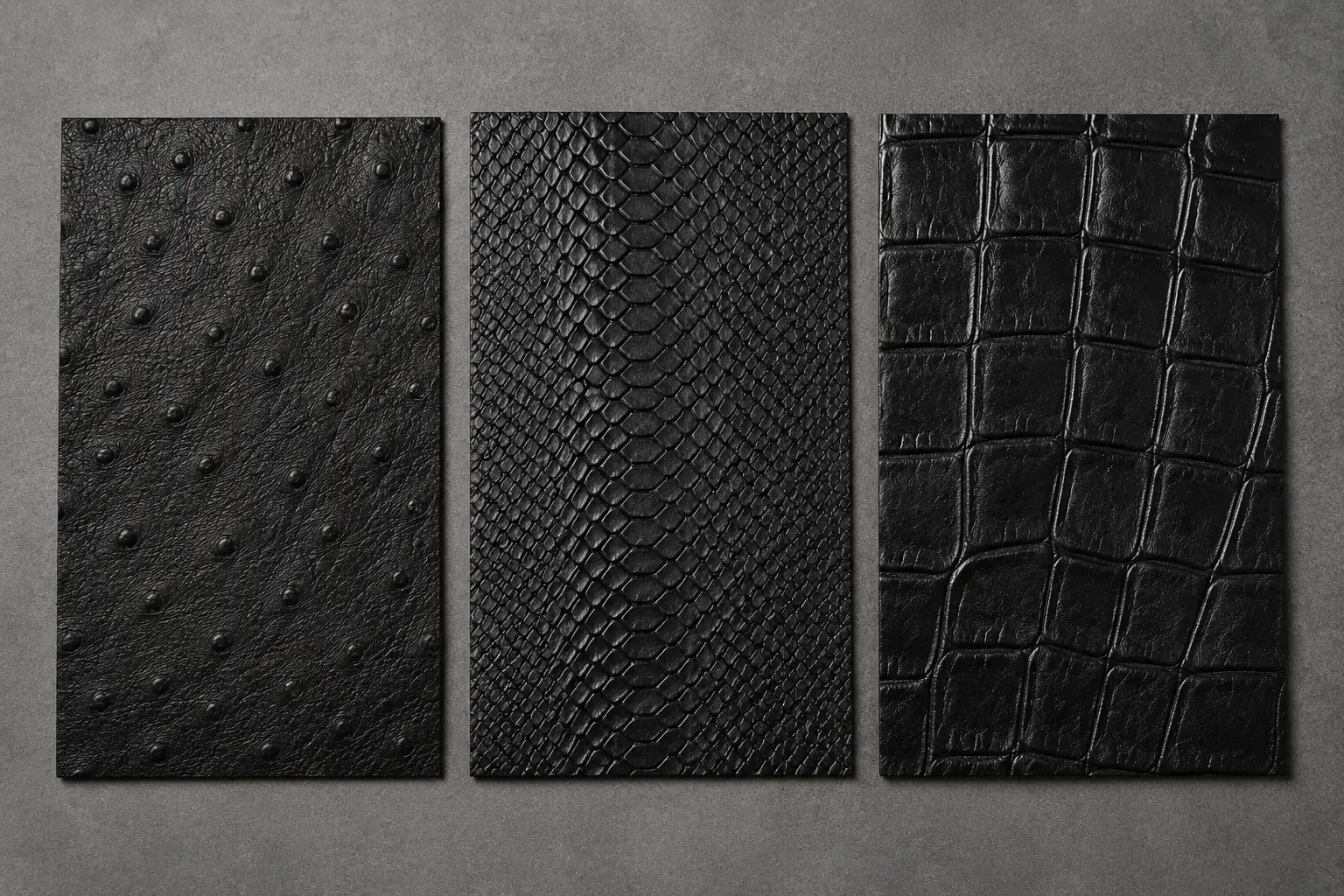
Exotic embossed leather has exploded in popularity because it delivers the visual drama of rare skins — ostrich, snake, crocodile — using genuine cowhide as the base. But each embossed pattern behaves differently in terms of texture, light reflection, and styling. This guide compares all three so you know exactly what to expect before you buy.
Embossed vs Genuine Exotic Skin: An Important Distinction
Before comparing patterns, it's worth clarifying terminology. Genuine ostrich, snake, or crocodile skin comes directly from the animal's hide and carries the natural, irregular texture unique to that species — these are rare, expensive, and often subject to strict import and trade regulations. Embossed leather, by contrast, starts as standard cowhide that is heat-pressed with a textured plate to replicate the visual pattern of these exotic skins, without using the exotic animal itself.
Embossed leather is significantly more affordable, more consistent in quality, and avoids the ethical and regulatory complications of genuine exotic hide — which is why it's become the standard choice for accessible exotic-look jackets.
Every exotic-pattern piece at Blackstone Jackets is clearly labeled — genuine cowhide base, heat-pressed embossed pattern, never marketed as real exotic skin.
Shop the Collection →Ostrich Embossed: Distinctive Quill-Node Texture
Genuine ostrich leather is instantly recognizable by its raised quill nodes — small round bumps scattered across the surface where feather follicles once were. Ostrich embossed leather replicates this pattern by pressing a raised-dot texture into cowhide, creating a similar tactile bumpiness without the six-figure price tag of real ostrich hide.
The quill-node pattern reads as more subtle from a distance compared to crocodile or snake embossing, making it a good entry point if you want an exotic texture without an overtly bold statement. Our men's ostrich embossed jacket collection includes options like the burgundy ostrich embossed leather jacket, and the women's ostrich embossed jacket collection offers the same texture in more tailored cuts.
Snake Embossed: Sharp, Directional Scale Pattern
Snake embossed leather features tightly overlapping scales arranged in a clear directional flow, giving it a sleeker, more graphic look than ostrich's scattered dot pattern. The scales are typically smaller and more densely packed than crocodile embossing, creating a finer, almost fabric-like visual texture from a distance while still showing clear depth up close.
This pattern tends to photograph particularly well and suits fitted, streamlined jacket cuts where the directional scale lines can follow the garment's silhouette. Our women's snake embossed jacket collection showcases this texture across several colorways.
Crocodile Embossed: Bold, Geometric Scale Blocks
Crocodile embossing is the boldest of the three, characterized by larger, more geometric rectangular scale blocks with pronounced ridge lines between them. It reads as the most obviously "exotic" pattern of the group and creates the strongest visual statement, especially in darker colors where the shadow lines between scale blocks stand out clearly.
Because the scale blocks are larger, quality control matters more here — poorly aligned embossing is more noticeable on crocodile patterns than on the finer ostrich or snake textures. Pieces like our black crocodile embossed leather jacket, brown crocodile embossed jacket, and brown genuine crocodile embossed jacket all use precisely aligned panel embossing to avoid this issue.
Side-by-Side Comparison
| Pattern | Texture Style | Visual Boldness | Best For |
|---|
| Ostrich | Raised round quill nodes | Subtle | Understated exotic look |
| Snake | Fine, directional scales | Medium | Fitted, streamlined cuts |
| Crocodile | Large geometric scale blocks | Bold | Statement outerwear pieces |
Which One Should You Choose?
If you want an exotic texture that still reads as fairly versatile day-to-day, ostrich embossing is the safest starting point. If you prefer a sleeker, more fashion-forward finish, snake embossing suits fitted silhouettes particularly well. If you want maximum visual impact and don't mind a bolder statement piece, crocodile embossing delivers the strongest presence of the three.
Whichever pattern you choose, the underlying leather grade matters just as much as the embossed texture itself — worth reviewing alongside our breakdown of full-grain vs top-grain vs bonded leather before you commit to a purchase.
Caring for Exotic Embossed Leather
- Use a soft cloth for regular dusting — avoid stiff brushes that can wear down raised texture details over time
- Condition every 4-6 months with a light leather conditioner rather than a heavy wax-based product
- Store on padded, wide hangers to avoid flattening the embossed pattern at fold points