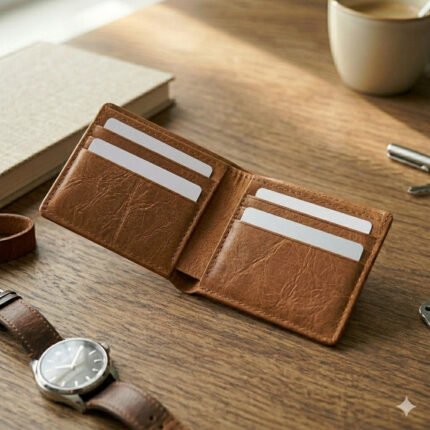
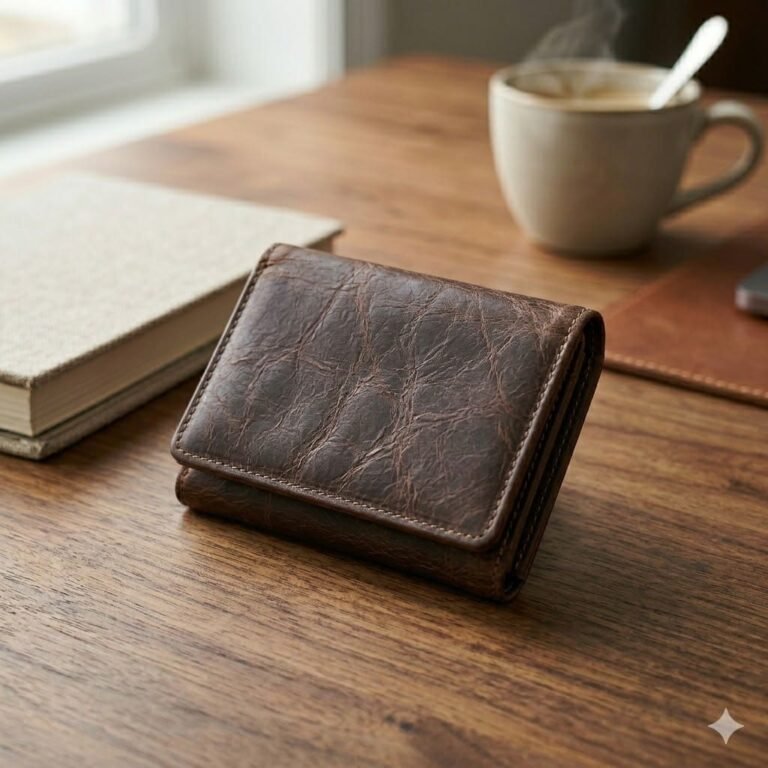
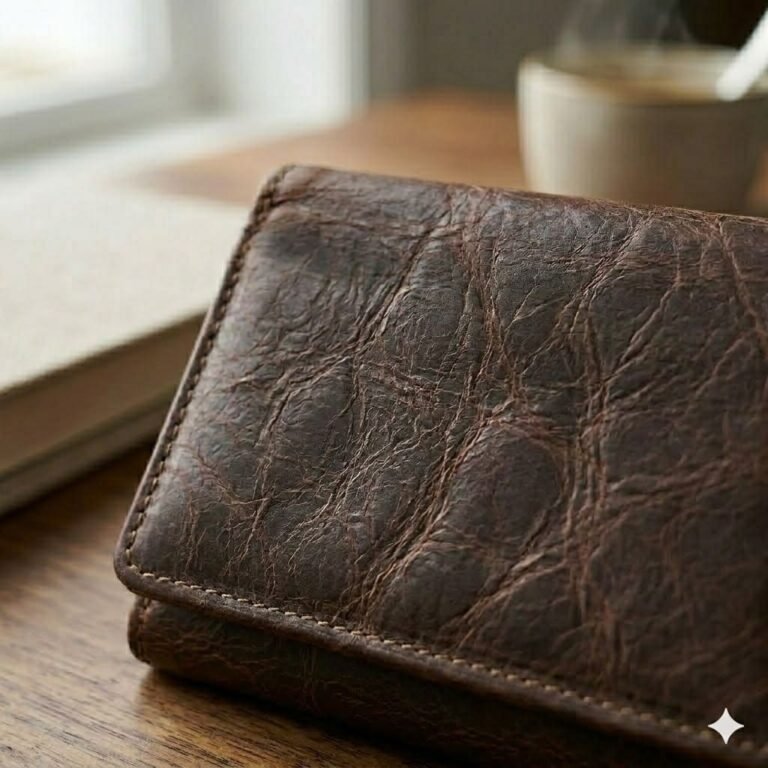
If a bifold never has quite enough room for everything you carry, the trifold solves that without ballooning into a bulky brick of a wallet. Folding into three sections instead of two creates real extra storage — most of our trifold wallets offer eight or more card slots across multiple panels, plus a separate bill compartment and often a clear ID window. Each fold is reinforced with extra stitching, since a trifold takes stress at two crease points instead of one. If you’re searching for a wallet with lots of card slots that still folds flat in a pocket, this is exactly that. Priced fairly for genuine leather, shipped free across the US, backed by a 30-day return policy, and new customers can use code BLACKSTONE10 at checkout. Read on for how to organize it well. Before you buy, check the details that actually separate a good one from a bad one: eight or more card slots across multiple folding panels, separate bill compartment plus a clear ID window on most styles, and reinforced stitching at both fold lines — specs most listings leave out entirely.

More Folds, More Room — Without the Bulk

Keep frequently used cards in the most accessible slots and rarely-used ones like loyalty cards toward the back. Because a trifold has two fold lines instead of one, it benefits from slightly more frequent conditioning to prevent cracking at both points. Pair it with our leather passport holders if you travel often and want a matching set, or consider our bifold wallets if you decide a slimmer profile matters more than maximum storage.

Organizing a Trifold So It Stays Practical

  • Eight or more card slots across multiple folding panels
  • Separate bill compartment plus a clear ID window on most styles
  • Reinforced stitching at both fold lines
  • Consolidates a card holder, cash wallet, and ID slot in one piece
  • Still folds flat enough for comfortable pocket carry

If you or the person you're buying for regularly ends up cramming extra cards into a bifold's limited slots, a trifold solves that directly by adding a third folding panel and typically doubling the available card capacity without significantly increasing the wallet's footprint in a pocket. The main tradeoff to expect is a slightly thicker fold when the wallet is closed, which is worth being upfront about if this is a gift for someone who's used to carrying a slimmer wallet and might need an adjustment period. Because a trifold flexes at two points instead of one, it also benefits from being conditioned somewhat more regularly than a bifold to prevent premature cracking at either fold line — a detail worth passing along if you're gifting one, since most people don't think to condition a leather wallet at all until it's already showing wear. This style tends to appeal specifically to buyers who've already tried a bifold and found the storage limiting, making it a natural second-wallet purchase rather than always someone's very first leather wallet.

Because a trifold folds at two points instead of one, check both fold lines for reinforced stitching rather than assuming the reinforcement seen at one fold extends to the other. A well-built trifold should close relatively flat despite carrying more storage than a bifold — if it bulges significantly even when only moderately loaded, that's usually a sign the internal card slot construction isn't as refined as it should be.

If you're torn between this and a bifold, consider counting your actual cards over the course of a normal week rather than guessing — anyone consistently carrying more than six or seven cards tends to be better served by the trifold's additional storage long-term.