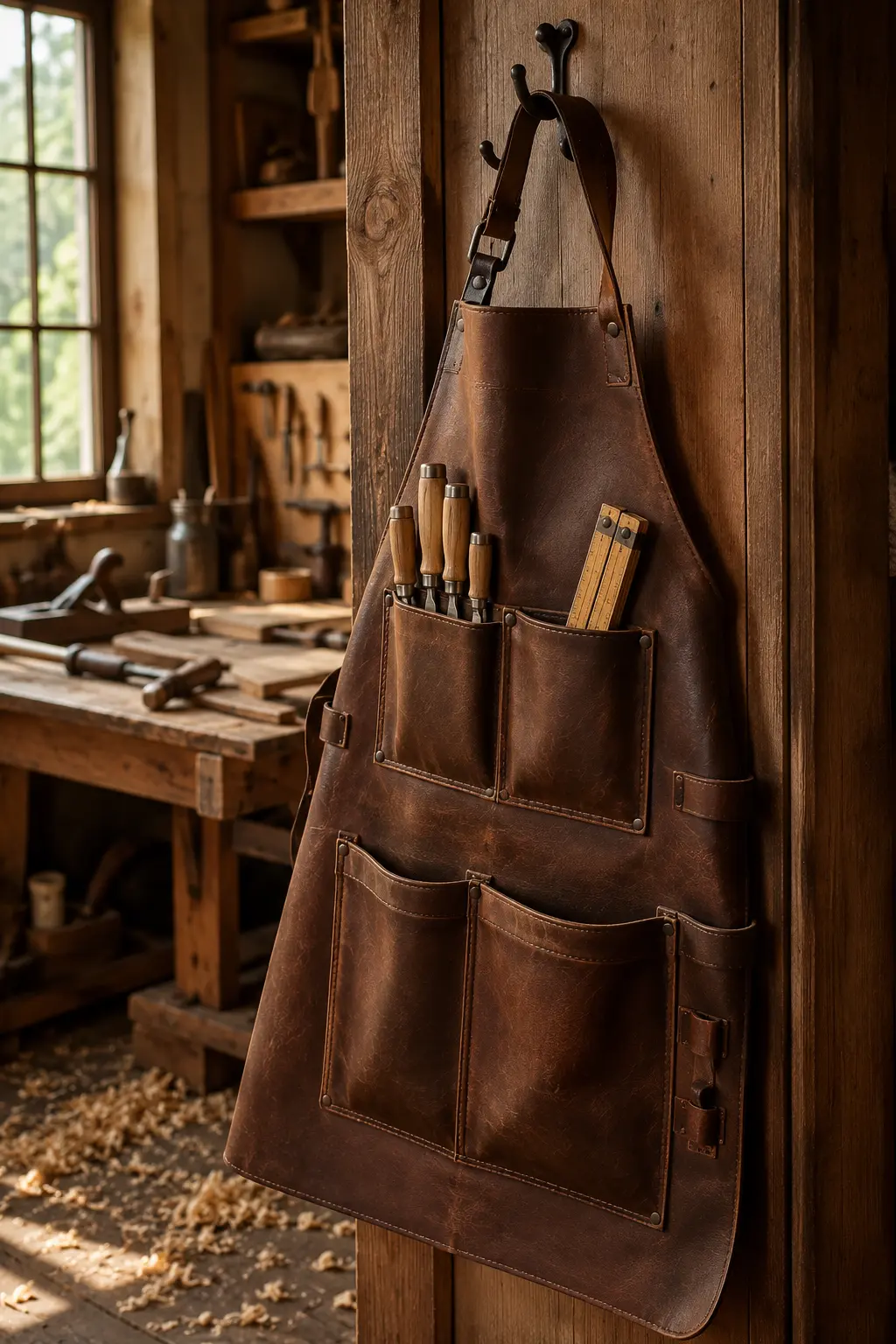
A leather apron isn't a one-size-fits-all purchase. A chef needs flexibility and easy cleaning. A welder needs heat and spark resistance. A woodworker needs pocket organization for tools, not maximum coverage. Choosing based on your actual trade — not just "leather apron" as a generic category — is what determines whether it earns a permanent spot in your workflow or ends up in a drawer.
Why Leather Over Other Materials
Cotton and canvas aprons are lighter and cheaper, but they wear through fast under repeated heat, sparks, or sharp-tool contact. Leather's density and natural fire resistance make it the standard choice across trades where the apron takes real abuse — kitchens, forges, welding bays, and workshops — because it resists punctures, minor burns, and abrasion far longer than fabric alternatives.
Every apron in our workwear line uses full-grain leather designed for daily trade use, not just occasional kitchen wear.
Shop Leather Aprons →Chef Aprons: Flexibility and Easy Cleaning
Kitchen work demands an apron that moves with you through long shifts while resisting oil, heat splashes, and the occasional knife nick. Chef leather aprons prioritize a lighter-weight hide with a smoother finish that wipes clean easily, paired with adjustable straps for the long hours professional kitchens demand. Our chef leather aprons are built specifically around this balance of flexibility and easy maintenance.
Welder and Blacksmith Aprons: Maximum Heat Resistance
Welding and blacksmithing involve direct exposure to sparks, molten metal splatter, and sustained radiant heat — conditions that would destroy a standard apron within a single shift. These aprons use thicker, heavier leather with minimal stitching exposure in high-contact zones, since even reinforced thread can weaken faster than the leather itself under repeated heat.
Our welder leather aprons and handcrafted welding apron for men's workwear use full-length coverage with reinforced panels at the chest and lap, where spark exposure is heaviest. The craftsman leather apron line extends this same heavy-duty approach to general metalworking and fabrication use.
Woodworker Aprons: Pocket Organization Over Bulk
Woodworking rarely involves the same heat exposure as metalwork, so the priority shifts toward tool accessibility — multiple pocket configurations for chisels, pencils, tape measures, and hardware, without unnecessary bulk that gets in the way of precise handwork. Our woodworker leather aprons are designed around this tool-first approach, with reinforced pocket seams that hold up to repeated tool insertion and removal.
Farrier and Gardener Aprons: Built for Outdoor Trade Work
Farriers working with horses need an apron that protects against kicks, hoof debris, and sharp trimming tools while allowing a full range of motion for bending and kneeling. Our handcrafted genuine leather farrier apron is built with this mobility requirement in mind.
Gardening work involves less impact but more exposure to soil, moisture, and repeated kneeling — our gardener leather aprons use a treated leather finish that resists moisture absorption better than untreated hide, extending the apron's usable life in outdoor conditions.
Comparing Apron Types by Trade
| Trade | Priority | Leather Weight |
|---|
| Chef | Flexibility, easy cleaning | Lightweight |
| Welder / Blacksmith | Heat and spark resistance | Heavy-duty |
| Woodworker | Tool pocket organization | Medium |
| Farrier | Mobility and impact resistance | Heavy-duty |
| Gardener | Moisture resistance | Medium, treated finish |
How to Care for a Work Apron
- Wipe down after every shift to remove oil, debris, or moisture before it soaks into the leather
- Condition every 2-3 months for heavy-use trade aprons, since daily wear dries out natural oils faster than casual leather goods
- Inspect stitching and pocket seams regularly, especially on tool-heavy aprons where repeated insertion stresses the seam
Final Thoughts
The right leather apron is the one built around your specific trade's stress points — heat for welders, pockets for woodworkers, flexibility for chefs, mobility for farriers. A generic "one size fits all" apron will always underperform a trade-specific design where it matters most.