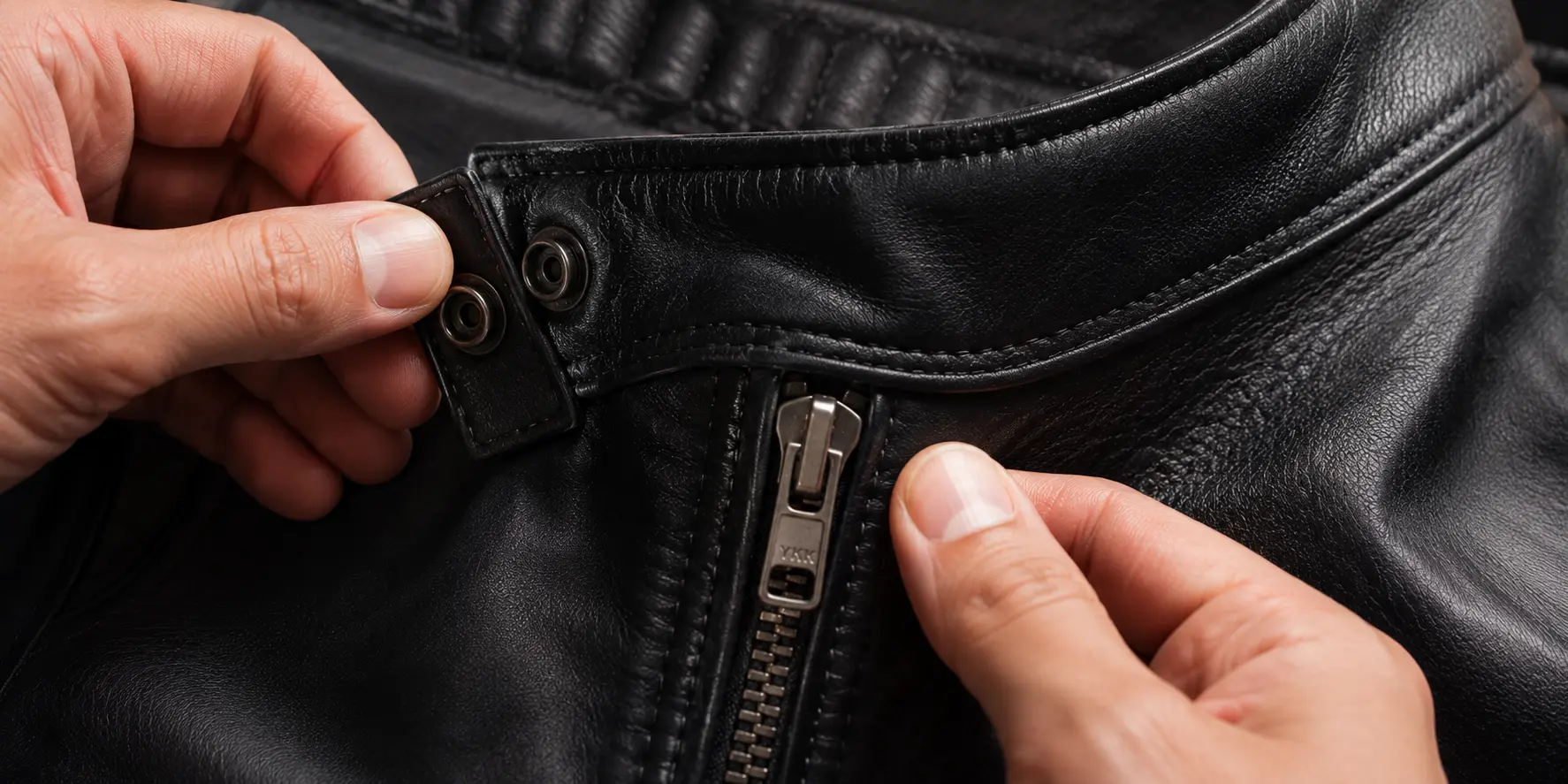
Two leather jackets can look identical in a photo yet differ wildly in quality and lifespan. The difference lives in the details: the leather grade, the stitching, the hardware, and the construction. This buyer's checklist gives you the exact quality markers to inspect so you never overpay for a jacket that won't last.
Quick Answer
- Leather grade: full-grain or top-grain, never bonded.
- Stitching: tight, even, no loose threads at stress points.
- Hardware: heavy, smooth zippers (YKK or Riri quality).
- Lining: durable, cleanly attached, no puckering.
1. Start With the Leather Grade
Quality begins with the hide. Full-grain leather is the strongest and most durable; top-grain is a solid genuine option; bonded leather is a red flag that signals a short lifespan. If a listing only says "genuine leather" without specifying the grade, ask — vague labeling often hides bonded material. Our guide on leather grades explained details each one, and our real vs faux leather guide shows how to confirm genuine hide.
2. Inspect the Stitching
Stitching is where cheap construction shows fastest. Look for tight, even stitches with no loose or fraying threads, especially at high-stress points like the shoulders, cuffs, and pocket corners. Reinforced double-stitching at these points is a strong sign of durable construction. Uneven or sparse stitching means the jacket will start failing at the seams within a season or two.
3. Test the Hardware
Zippers and snaps take constant use, so quality hardware matters. A good zipper feels substantial, glides smoothly, and doesn't catch. Premium jackets use trusted zipper brands like YKK or Riri. Snaps and buckles should feel solid and secure, not flimsy or loose. Cheap hardware is often the first thing to break on an otherwise decent jacket.
4. Check the Lining and Interior
Turn the jacket inside out. A quality lining is cleanly attached with no puckering, made from durable material, and stitched neatly at the edges. The interior construction often reveals more about quality than the exterior — sloppy interior finishing signals rushed manufacturing throughout.
5. Feel the Weight and Structure
Genuine, quality leather has a satisfying weight and structure to it. A jacket that feels suspiciously light and flimsy is often thin, low-grade, or synthetic material. That said, weight should suit the style — a biker jacket is naturally heavier than a lightweight bomber.
Quality Checklist at a Glance
| Feature | Quality Sign | Red Flag |
|---|
| Leather | Full/top-grain, natural texture | "Genuine leather" only, uniform look |
| Stitching | Tight, even, reinforced | Loose threads, sparse stitches |
| Hardware | Heavy, smooth, branded | Flimsy, catching zippers |
| Lining | Clean, durable, neat | Puckered, thin, fraying |
How to Inspect a Jacket When Buying Online
Buying online removes the ability to touch and smell the leather, so you have to rely on other signals. Read the product description carefully for the specific leather grade — reputable sellers state whether it's full-grain or top-grain rather than just "genuine leather." Zoom into product photos to check the grain texture; genuine leather shows natural, irregular variation while synthetic looks uniform. Look for close-up shots of the stitching and hardware, and check whether the seller specifies the zipper brand. Finally, read reviews for mentions of durability and how the jacket held up over time. A transparent listing that answers these questions is itself a quality signal.
Why Construction Matters More Than Brand
It's tempting to equate a big brand name with quality, but construction tells the real story. A lesser-known maker using full-grain leather, reinforced stitching, and quality hardware will produce a longer-lasting jacket than a famous label cutting corners with bonded leather. Focus on the tangible markers in this checklist — the leather grade, the stitching, the hardware, the lining — rather than the logo. These are what actually determine whether a jacket lasts two years or twenty, regardless of the name attached to it.
The Long-Term Payoff of Buying Quality
Investing in a quality leather jacket pays dividends for decades. A well-made full-grain jacket doesn't just survive — it improves, developing a personalized patina and molding to your body over years of wear. This is the opposite of fast-fashion outerwear, which looks worse every season until it's discarded. When you buy quality once and care for it, you end up with a piece that becomes more uniquely yours over time, tells a story, and often outlasts the trends entirely. That's the real return on choosing quality over price.
Trusting Your Assessment
Once you've run through the quality checklist, trust what you've found. If the leather is genuine and well-finished, the stitching tight, the hardware solid, and the construction clean, you're looking at a leather jacket built to last. If several markers raise concerns, it's wiser to walk away than to hope for the best — quality issues only worsen with wear. Developing this assessment instinct takes just a few careful inspections, after which spotting a well-made jacket becomes second nature. The collection is built around these standards, with genuine leather and reinforced construction across every piece, so you can shop knowing the quality markers you've learned to check are already met rather than left to chance.
Final Thoughts
A quality men's leather jacket reveals itself in four checks: the leather grade, the stitching, the hardware, and the lining. Run through this checklist before every purchase and you'll consistently separate jackets built to last decades from ones that only look the part. Once you own a quality jacket, protect your investment with our care guide.