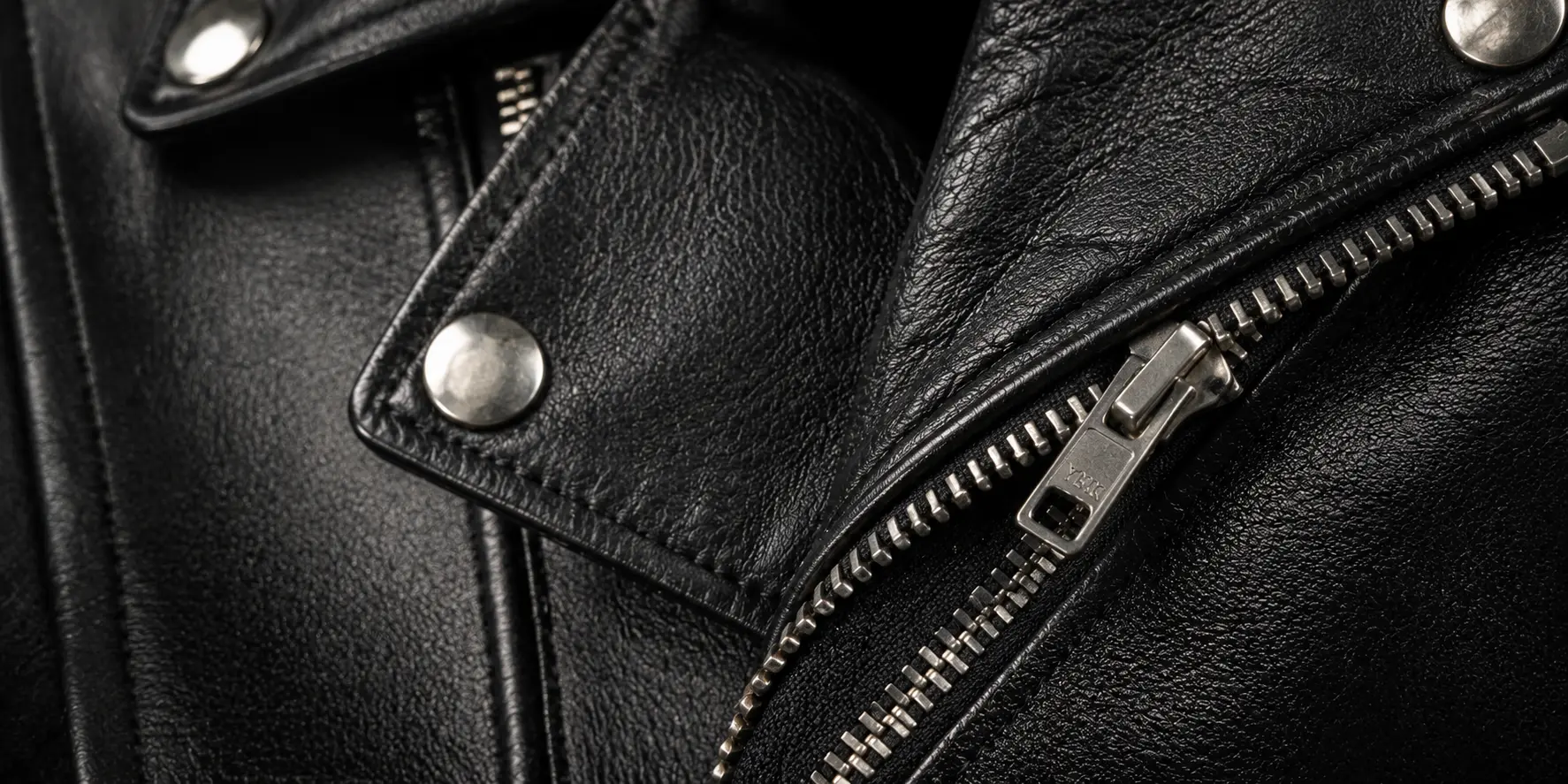
The biker jacket's rugged design puts more stress on its construction than almost any other style — which means quality matters even more. A cheap biker jacket fails fast at the zip, seams, and hardware. This buyer's checklist gives you the exact markers to inspect so you invest in a biker built to last.
Quick Answer
- Leather: genuine full-grain or top-grain cowhide, never bonded.
- Asymmetric zip: heavy, smooth, quality-branded (YKK/Riri).
- Hardware: solid snaps and buckles that feel substantial.
- Stitching: tight and reinforced at high-stress lapels and shoulders.
1. Start With the Leather
A biker jacket flexes and takes abuse, so leather quality is the foundation. Full-grain cowhide is ideal — tough, protective, and it ages beautifully. Top-grain is a solid genuine option. Bonded leather is a dealbreaker for a biker; it will crack at the flex points within a year. Confirm the grade using our leather grades guide and verify it's genuine with our real vs faux guide.
2. Test the Asymmetric Zip
The offset front zip is the biker's defining feature and its most-used component. A quality zip feels heavy, glides smoothly across its full length, and doesn't catch. Look for trusted brands like YKK or Riri. A flimsy or sticky main zip is a serious red flag, since it's the part you'll use every single time you wear the jacket.
3. Check All the Hardware
Biker jackets carry more hardware than most styles — snap-down collars, zippered cuffs, buckle straps, and pocket zips. Every piece should feel solid and operate smoothly. Snaps should close firmly, buckles should hold, and secondary zips should glide. Cheap hardware is often the first thing to fail on an otherwise passable jacket.
4. Inspect the Stitching
Focus on the high-stress zones: the lapels, shoulders, and where the zip meets the leather. Stitching here should be tight, even, and ideally reinforced. Loose threads or sparse stitching at these points mean the jacket will start coming apart exactly where the stress is highest.
5. Assess Weight and Structure
A quality biker jacket has real substance — the cowhide should feel weighty and structured, holding the jacket's shape. A biker that feels light and floppy is usually thin, low-grade, or synthetic material that won't deliver the protective, rugged character the style is known for. Compare the feel against genuine options in the biker collection.
Quality Checklist at a Glance
| Feature | Quality Sign | Red Flag |
|---|
| Leather | Full/top-grain cowhide | Bonded or vague "genuine" |
| Main zip | Heavy, smooth, YKK/Riri | Sticky, flimsy, catches |
| Hardware | Solid snaps and buckles | Loose, rattly, thin |
| Stitching | Reinforced at lapels/shoulders | Loose threads at stress points |
Testing Hardware Durability
Since biker jackets carry more hardware than any other style, testing it thoroughly is worthwhile. Work every zip through its full range several times — quality zips stay smooth throughout, while cheap ones catch or stiffen partway. Press and release the snaps to confirm they engage firmly and don't pop open under light stress. Tug gently on buckles and D-rings to check they're securely anchored to the leather, not just lightly stitched. Hardware failure is one of the most common ways an otherwise decent biker jacket becomes unwearable, so this hands-on testing is time well spent.
What the Interior Reveals
The inside of a biker jacket often tells you more about its quality than the outside. Turn it inside out and examine the lining — quality jackets use durable lining material, cleanly stitched with no puckering or loose threads. Check the interior seams where panels meet; on a well-made jacket these are neat and reinforced. Look at how the zipper is attached from the inside, as sloppy internal zip attachment leads to early failure. A brand that finishes the hidden interior carefully has almost certainly applied the same care to the visible exterior.
Judging Long-Term Durability
Some quality signs only reveal themselves over time, but you can predict durability at purchase. Genuine full-grain cowhide, reinforced stitching at the lapels and shoulders, and quality-branded hardware are the strongest predictors of a jacket that lasts decades. Ask about or look for double-stitching at high-stress points. Consider the weight — substantial leather generally outlasts thin hides. And factor in the care you're willing to give, since even the best biker jacket needs regular conditioning, as our care guide explains, to reach its full lifespan.
Trusting Your Assessment
Once you've run through the quality checklist, trust what you've found. If the leather is genuine and well-finished, the stitching tight, the hardware solid, and the construction clean, you're looking at a biker jacket built to last. If several markers raise concerns, it's wiser to walk away than to hope for the best — quality issues only worsen with wear. Developing this assessment instinct takes just a few careful inspections, after which spotting a well-made jacket becomes second nature. The collection is built around these standards, with genuine leather and reinforced construction across every piece, so you can shop knowing the quality markers you've learned to check are already met rather than left to chance.
Final Thoughts
A quality men's biker jacket reveals itself in the leather, the asymmetric zip, the hardware, and the reinforced stitching. Because the biker takes more stress than any other style, these checks matter more here than anywhere else. Run through them before you buy, and protect your investment afterward with our care guide.