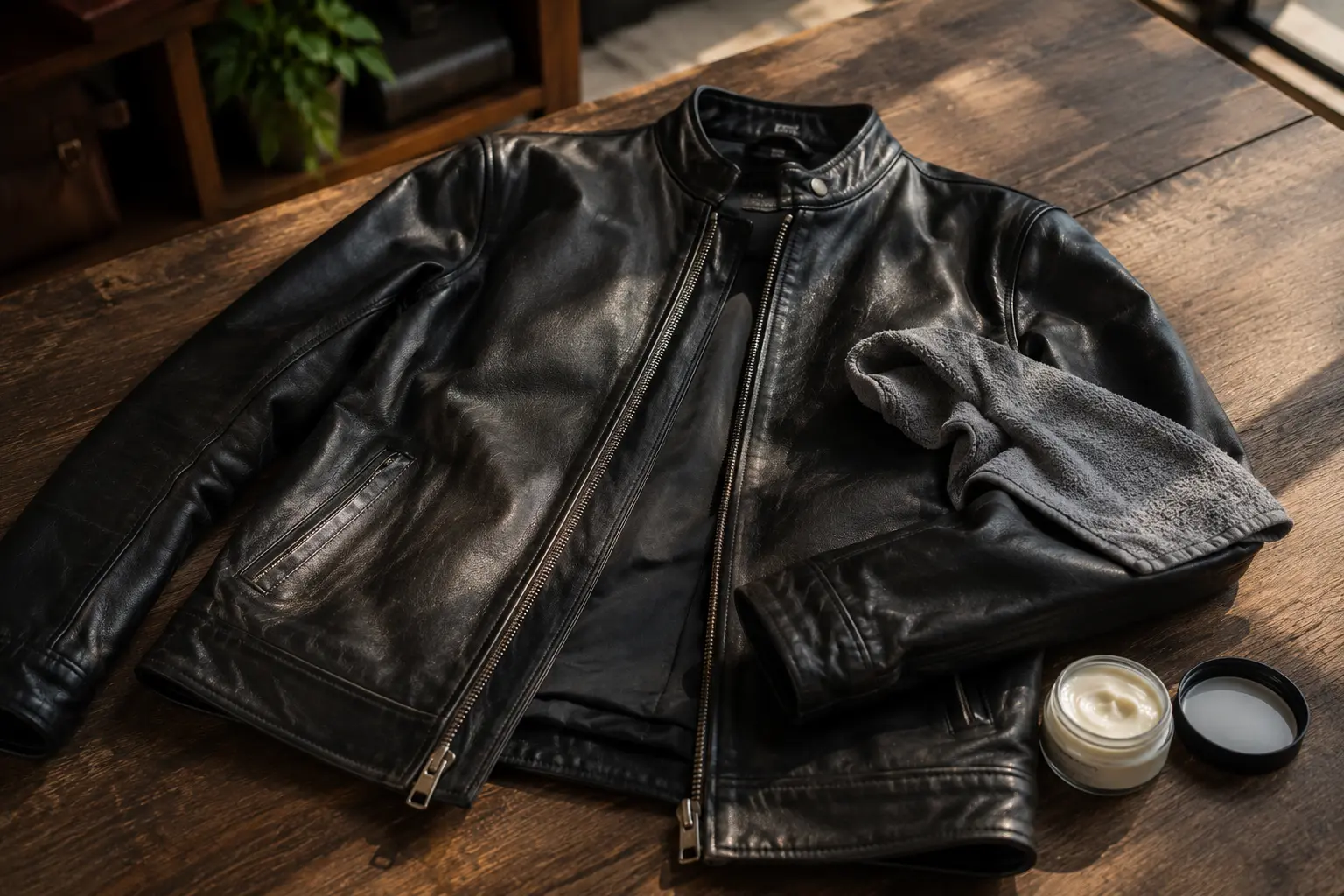
A genuine leather jacket is built to outlast almost every other piece in your wardrobe — but only if it's cared for properly. Neglect turns supple, full-grain leather brittle and cracked within a few winters. A simple, consistent routine, on the other hand, can keep the same jacket looking better every year you own it.
Here's exactly how to clean, condition, and store a leather jacket the right way.
Why Leather Care Actually Matters
Leather is skin — quite literally, tanned animal hide — and like skin, it dries out, cracks, and loses flexibility without occasional moisture and protection. Most leather jacket damage isn't from a single accident; it's from years of dust buildup, dry storage, and sun exposure with zero conditioning in between.
The good news: proper care takes maybe fifteen minutes, a few times a year. Before diving into the routine, it's worth confirming your jacket's material grade first — care differs slightly depending on whether you own full-grain, top-grain, or a lower-grade leather.
Not sure what conditioner is safe for your jacket's leather type? We can point you to the right product for your exact grade.
Shop Genuine Leather →The Core Care Routine
01
Wipe Down After Every Few Wears
Use a soft, dry microfiber cloth to remove surface dust and light dirt after regular wear. This alone prevents most long-term grime buildup that eventually dulls the leather's natural shine.
02
Clean Stains the Right Way
For light stains, dampen a cloth with lukewarm water and a drop of mild, pH-neutral soap, wipe gently in circular motions, then immediately dry with a clean towel. Never soak leather, machine wash it, or scrub aggressively — this strips natural oils and can permanently damage the grain.
03
Condition Every 3-6 Months
Apply a leather conditioner made specifically for jackets (avoid generic furniture polish) using a soft cloth in small circular motions, then let it absorb for a few hours before wearing. Conditioning restores the natural oils lost to daily wear and prevents cracking, especially at high-flex points like elbows and cuffs.
04
Store on a Wide, Padded Hanger
Thin wire hangers distort the shoulder shape over time. Use a wide, contoured hanger that mimics the jacket's natural shoulder line, and store it in a breathable garment bag — never sealed plastic, which traps moisture and encourages mildew.
What to Avoid
- Direct sunlight for long periods. UV exposure fades color and dries out the leather's natural oils over time.
- Heat sources for drying. Never use a hairdryer, radiator, or direct heat if the jacket gets wet — this causes the leather to shrink and stiffen. Let it air dry naturally, away from direct heat, stuffed loosely with paper to hold its shape.
- Plastic dry-cleaning bags for long-term storage. They trap humidity and can cause mildew or discoloration over months of storage.
- Ignoring small stains. Fresh stains are far easier to treat than ones left to set for weeks.
Care Schedule at a Glance
| Task | Frequency | Why It Matters |
|---|
| Dust wipe-down | Every few wears | Prevents dirt buildup and dulling |
| Stain cleaning | As needed, immediately | Prevents permanent staining |
| Conditioning | Every 3-6 months | Prevents cracking and stiffness |
| Storage check | Seasonally | Maintains shape, avoids mildew |
Care Differences Across Jacket Styles
Different styles have different high-stress zones that need extra attention. A men's biker jacket flexes heavily at the elbows and shoulders, so those areas dry out and crack first without regular conditioning. A relaxed men's bomber jacket takes less structural stress but its ribbed cuffs and hem can trap dirt, so give those a wipe-down more often.
The same applies to women's pieces. A fitted women's leather jacket benefits from focused conditioning at the seams and shoulders, while a women's bomber jacket mostly needs attention at the closures and cuffs. For a kids biker jacket, which sees rougher, more active wear, a slightly more frequent wipe-down and conditioning schedule pays off, since kids' jackets take more scuffs and spills than adult ones.
Caring for a Jacket You Wear Every Winter
If you wear your jacket heavily through cold months, pay extra attention to high-friction zones — collar, cuffs, and elbows — since these areas lose natural oils fastest. A slightly more frequent conditioning schedule (every 2-3 months instead of 3-6) is worth it for daily-wear jackets.
And if you're not sure your jacket's fit is even correct to begin with, revisit our shoulder seam fit guide — a well-fitted jacket also experiences less unnecessary stress and stretching at the seams over time. Color also plays a role in how visible wear becomes; our guide on choosing leather jacket colors explains why darker shades hide everyday marks more forgivingly.
The Long-Term Payoff
Proper care isn't about vanity — it's about protecting an investment. A genuine leather jacket that's conditioned, cleaned, and stored correctly can realistically outlast every other piece in your wardrobe by decades, developing a richer patina and better fit the longer you own it. Fifteen minutes a few times a year is a small price for a jacket that improves with age rather than falling apart.