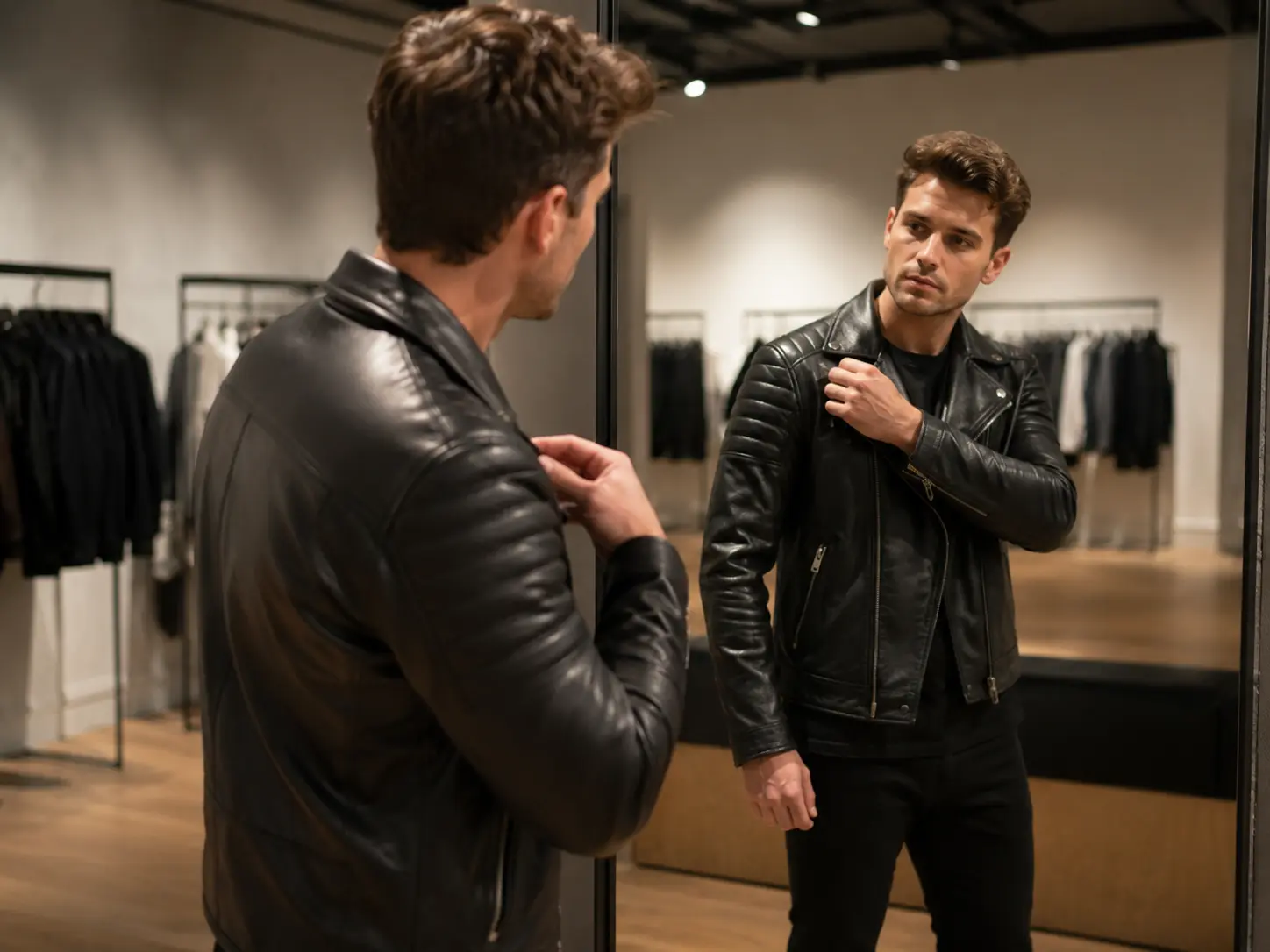
Most people return a leather jacket for one reason — it doesn't fit right. But "fit" isn't a vague feeling; it's a set of specific measurements you can check in under two minutes, before you ever place an order. Get the shoulder seam right and almost everything else can be adjusted. Get it wrong, and no tailor on earth can save it.
This guide breaks down exactly how a leather jacket should fit — shoulder, sleeve, chest, and length — so you order the right size the first time.
Why Fit Matters More Than Material
A $600 full-grain leather jacket in the wrong size will always look cheaper than a $150 jacket that fits perfectly. Fit is what makes a jacket look tailored rather than borrowed. And unlike cotton or denim, leather doesn't have much stretch forgiveness — it molds to the body you buy it for, not the body you wish you had.
If you haven't already, it's worth reading our guide on how to tell real leather from faux leather first — material and fit are the two decisions that determine whether a jacket lasts one season or twenty.
Not sure which size to order? Every Blackstone Jackets listing includes a detailed size chart with shoulder-to-shoulder measurements.
View Size Guide →The Four Fit Checks, In Order
01
The Shoulder Seam Rule (Non-Negotiable)
The seam where the sleeve meets the body of the jacket must sit exactly at the edge of your shoulder bone — not further down your arm (too big) and not riding up toward your neck (too small). This is the single measurement a tailor cannot fix. Everything else on this list can be altered after purchase; this one can't.
02
Sleeve Length
Sleeves should end right at your wrist bone, allowing your shirt cuff (if any) to peek out slightly. Too long and the jacket looks borrowed; too short and it looks outgrown. Sleeve length can be shortened by a leather tailor fairly cheaply, but it cannot be lengthened, so when between sizes, size up rather than down.
03
Chest and Torso Room
You should be able to fit one flat hand between your chest and the jacket when zipped, and comfortably layer a t-shirt or thin sweater underneath. If you're planning to wear it mostly over hoodies in colder months, size up slightly. If it's a year-round layering piece, keep it closer to the body.
04
Jacket Length
Classic biker and bomber styles should hit around the hip bone — long enough to cover your belt line, short enough not to bunch when sitting. Longer trucker or café racer styles can sit slightly lower, but should never extend past mid-thigh unless you're intentionally buying an overcoat-style leather.
What Can (and Can't) Be Tailored Later
Understanding this list before you buy saves you from an unfixable mistake:
- Can be adjusted: sleeve length (shortened only), waist width, cuff tightness, lining replacement
- Cannot be adjusted: shoulder seam placement, sleeve length (if too short), overall jacket length on structured biker styles
When in doubt between two sizes, always size toward the option that gets your shoulder seam right — everything else is a quick fix for a local tailor.
The Break-In Factor: Buy Snug, Not Loose
Unlike fabric jackets, leather softens and loosens slightly with wear — especially across the shoulders and underarms — as the fibers relax over the first few weeks of use. A jacket that feels snug (but not tight) in the store or on first try-on will typically feel just right after 2-3 weeks of regular wear. Buying a size up to compensate for this is one of the most common fit mistakes people make.
Common Fit Mistakes to Avoid
- Assuming your size is universal across brands. A size 40 in one brand can fit like a 38 or 42 in another — always check the brand's actual shoulder and chest measurements, not just the size label.
- Chasing the oversized trend without adjusting expectations. Oversized fits can look great intentionally, but an accidentally oversized jacket just looks like the wrong size.
- Ignoring sleeve length in favor of chest fit. Many buyers focus only on chest room and forget that sleeve length is the detail most people notice first.
Quick Fit Reference
| Body Area | What Right Looks Like | Fixable Later? |
|---|
| Shoulder Seam | Sits at the edge of shoulder bone | No |
| Sleeve Length | Ends at wrist bone | Only if shortening |
| Chest | One flat hand of room when zipped | Yes, minor adjustments |
| Jacket Length | Hits at hip bone | Rarely, style-dependent |
How Fit Checks Differ by Jacket Style
The four checks above apply universally, but the acceptable range shifts depending on the silhouette. A structured piece like our black crocodile embossed biker jacket should sit closer to the body with almost no excess room at the waist, since the style depends on a sharp, fitted line. A relaxed silhouette such as our men's bomber jacket collection naturally allows more room through the chest and waist without looking oversized, since the boxier cut is part of the design. If you're deciding between a fitted biker cut and a roomier bomber, our guide on biker vs bomber vs café racer body types goes further into which silhouette suits which build.
How to Measure Yourself at Home
Use a soft measuring tape and compare against the brand's size chart before ordering:
- Shoulder width: Measure from one shoulder edge to the other, across your back.
- Chest: Measure around the fullest part of your chest, keeping the tape level.
- Sleeve length: Measure from the shoulder edge down to your wrist bone with your arm slightly bent.
Compare these three numbers against our detailed size chart rather than relying on generic S/M/L labels, which vary significantly between brands. Once your fit is confirmed, our leather jacket care guide is worth reading next, since a well-fitted jacket also experiences less unnecessary stress at the seams over years of wear.
How Fit Changes Across Different Jacket Styles
Not every silhouette follows the exact same fit rules. A structured, fitted cut like a biker jacket demands the shoulder seam sit precisely, since the whole style depends on a sharp, tailored line. A men's biker jacket should feel close through the body with almost no excess fabric at the waist. A relaxed bomber, on the other hand, is built with more room by design — a men's bomber jacket is meant to sit a little looser through the torso while still hitting the shoulder correctly.
The same logic applies across women's styles. A fitted women's leather jacket follows the close-fit rules above, while a roomier women's bomber jacket is intended to have a more relaxed drape. Knowing the intended fit of the style prevents you from mistakenly ordering a bomber a size down trying to make it "fitted," or a biker a size up trying to make it "comfortable."
Fitting Kids and Layered Winter Jackets
Kids' jackets follow slightly different logic — you want a little growing room without sacrificing the shoulder fit entirely, since an oversized jacket restricts movement and looks sloppy. Our kids biker jacket collection is cut with this balance in mind. For heavily layered winter jackets, size for the layers you'll actually wear underneath most often — not the single thickest sweater you own once a year.
The core principle stays the same across every age and style: get the shoulder seam right first, since it's the one measurement no tailor can fix. Everything else — sleeve, waist, cuff — can be adjusted afterward if needed.