How to Remove Scratches from a Leather Jacket | Blackstone Jackets
Care Edit
How to Remove Scratches from a Leather Jacket
Most surface scratches on a leather jacket can be fixed at home in minutes: rub the scratch gently with your finger to warm the leather and redistribute its oils, then apply a small amount of leather conditioner or a matching leather balm to blend it in.
Blackstone JacketsUpdated October 20267 Min Read
Quick Answer
Most surface scratches can be fixed at home in minutes.
Start with the finger-rub: warmth redistributes the leather’s natural oils.
Blend remaining marks with conditioner or a matching leather balm.
Deeper scratches need colored repair cream or professional help — never household oils, shoe polish, or heat.
Why Leather Jackets Get Scratched
Scratches are simply part of a leather jacket's life. Genuine leather is a natural material with fibers that separate when something sharp drags across the surface — keys in the same pocket, a zipper pulled carelessly, a brush against a rough wall. The good news is that quality full-grain and top-grain leather is remarkably forgiving. Because the hide is porous and flexible, light marks often fade on their own with normal wear as body heat and friction redistribute the natural oils in the leather.
Understanding what makes a quality leather jacket helps here: jackets made from full-grain or top-grain hides self-heal far better than corrected or bonded leather, whose artificial surface coating cracks instead of flexing. If your jacket is a genuine leather piece from a maker like Blackstone Jackets, minor scratches are maintenance, not damage.
Assess the Scratch First
Before reaching for any product, look closely at the scratch and answer two questions:
1. Is it a surface scuff or a deep cut?
Run your fingernail gently across the mark. If your nail doesn't catch, it's a surface scuff — the top finish is disturbed but the hide is intact, and the finger-rub method below will usually fix it. If your nail catches, the scratch has cut into the leather fibers. If you can see a pale, light-colored line where the leather's inner layers are exposed, you'll need a colored repair product.
2. Is the leather finished or unfinished?
Most jacket leather is finished with a light protective coating, which makes blending easier. Suede and nubuck are unfinished — for those, use a suede eraser and brush rather than creams or balms.
Method 1: The Finger-Rub Technique (Surface Scuffs)
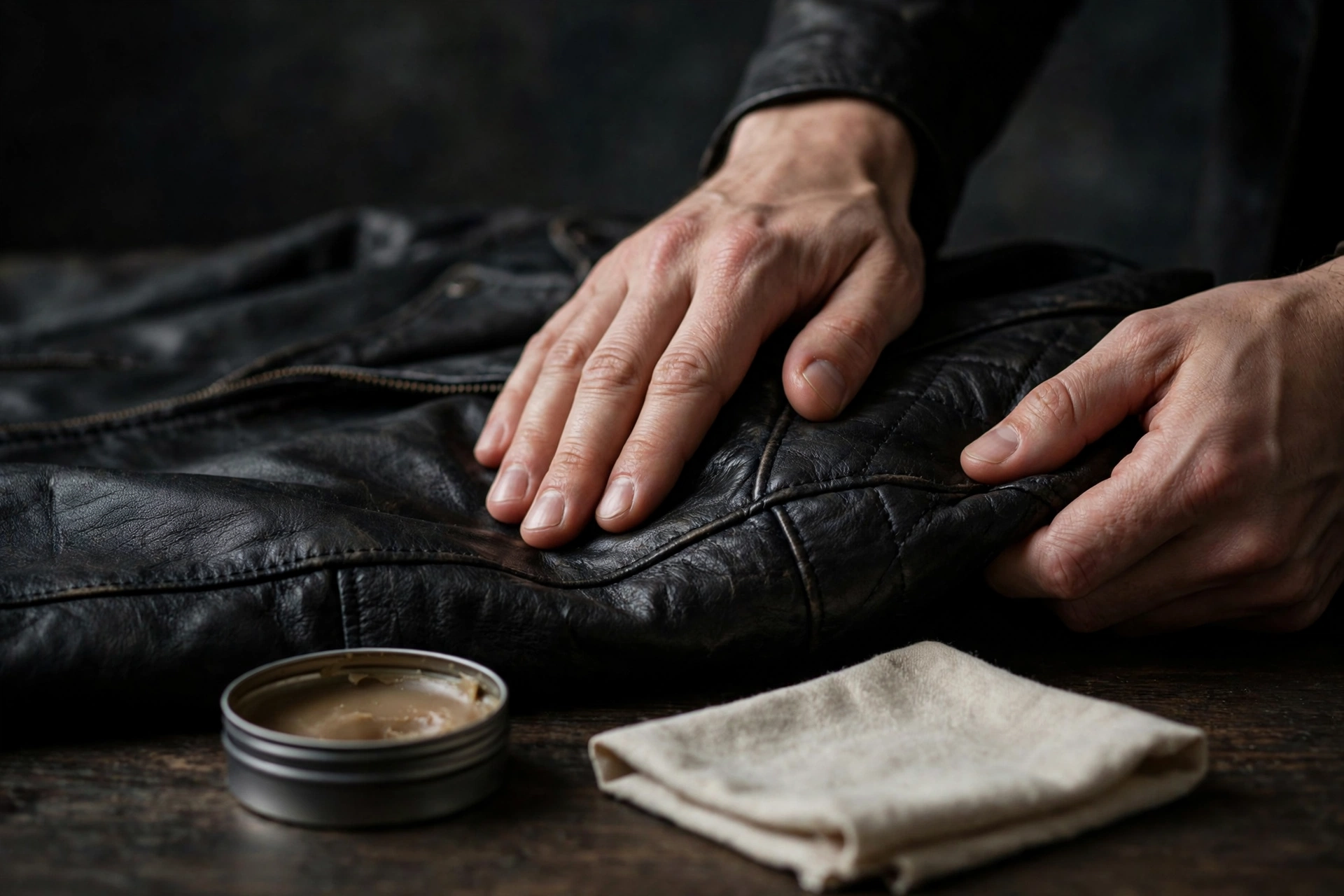
This is the simplest and most underrated repair. Leather responds to warmth and friction the way skin does — because it essentially is skin.
Place your finger firmly on the scratch and rub back and forth with moderate pressure for 30–60 seconds.
The friction generates gentle warmth, which reactivates the leather's natural oils and waxes, pushing the separated fibers back together.
Rub outward from the scratch into the surrounding leather to feather the edges.
You will be surprised how often a "ruined" jacket looks perfect after this alone. Do this in good daylight so you can see when the mark has blended. If the scuff has lightened but is still visible, move to Method 2.
Method 2: Leather Conditioner Blend
Conditioner is your best friend for scratch repair — it adds moisture and oils that darken the exposed fibers and restore the leather's sheen.
Clean the area first with a barely damp, soft cloth and let it dry completely.
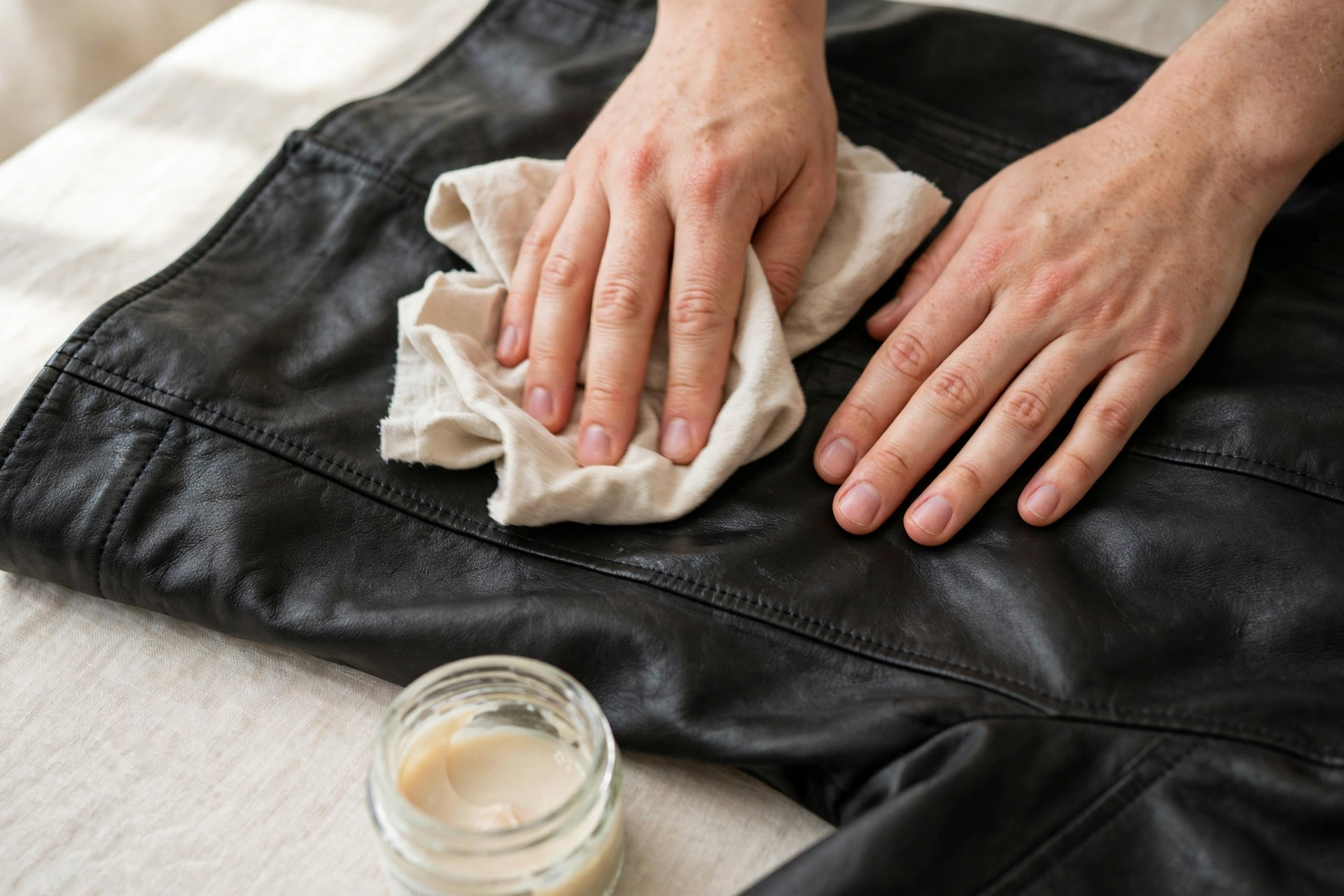
Put a pea-sized amount of quality leather conditioner on a soft cotton cloth (not directly on the jacket).
Massage it into the scratch using small circular motions, then feather outward over the surrounding panel.
Buff lightly with a clean, dry cloth and let the jacket rest for an hour.
Conditioning works best on jackets you already care for regularly. If you haven't read it yet, our guide on how to care for a leather jacket explains a full cleaning and conditioning routine that prevents scratches from settling in permanently.
Method 3: Colored Leather Balm or Repair Cream (Deeper Scratches)
When the scratch has cut deep enough to show the pale inner hide, oil alone won't restore the color. You'll need a pigmented product:
Choose a leather repair cream or balm that matches your jacket's color. Test it first on a hidden spot — inside a pocket flap or the lower back hem — and wait for it to dry, since creams dry darker than they look wet.
Apply a thin layer into the scratch with a cotton swab or your fingertip, building up gradually rather than laying it on thick.
Feather the edges with a clean cloth and let it cure for the time the product recommends.
Finish with a light pass of conditioner over the area to even out the sheen.
Less is more. Two thin coats blended well will always look more natural than one thick one. Popular colors like black and brown are easy to match — a black leather biker jacket responds especially well to black leather balm, since black blends almost invisibly.
What NOT to Do
The internet is full of bad advice for leather scratch repair. Avoid these:
Olive oil, coconut oil, and other cooking oils. They go rancid, darken leather unpredictably, and can rot stitching over time.
Shoe polish. It's formulated for hard leather shoes, contains waxes and solvents that can cake on jacket leather and transfer to your clothes.
Hair dryers or direct heat. Heat dries leather out and can set the scratch permanently or crack the finish.
Magic erasers and abrasive pads. These sand the finish off, turning a small scratch into a bald patch.
Sharp tools to "flatten" the scratch. You'll gouge the leather and make everything worse.
When to Call a Professional
Some scratches are beyond DIY. Take the jacket to a leather repair specialist if the cut is deep enough to feel like a groove with your fingertip, if the leather is torn rather than scratched, if the damage is on a seam or edge, or if you've tried balm and the color match looks wrong. A professional can re-dye a panel, re-grain the surface, and re-seal the finish in ways home products can't. Expect a proper repair to take a few days and be worth it for a jacket you plan to keep for years.
Preventing Scratches in the First Place
The easiest scratch repair is the one you never have to do:
Condition twice a year. Supple, moisturized leather resists scratching far better than dry, brittle leather.
Hang it properly. Use a wide, padded hanger — never wire hangers — and give the jacket space in the closet so zippers from neighboring garments can't scrape it.
Keep keys and sharp objects out of the pockets. Use a bag instead.
Store it away from rough surfaces. When traveling, pack the jacket inside-out in a garment bag.
A well-made jacket earns its character marks. Light scuffs on a brown flight leather jacket or a distressed café racer jacket often develop into the rich patina that makes vintage leather so desirable. Fix what bothers you, and let the rest become part of the story.
Shop Men’s Leather Jackets
Find your next leather jacket in the men’s collection.
Can I use my finger to fix a scratch on a leather jacket?
Yes — gentle finger friction with body heat is often enough to blend surface scuffs by redistributing the leather's natural oils, and it should always be your first step.
Will leather conditioner remove scratches?
Conditioner won't erase a scratch, but it darkens the exposed fibers and restores sheen, which makes light and medium scratches blend in with the surrounding leather.
How do I fix a deep scratch that shows white underneath?
Use a color-matched leather repair cream or balm, testing on a hidden area first. Apply in thin layers, feather the edges, and finish with conditioner. Torn leather needs a professional.
Does olive oil fix leather scratches?
No. Cooking oils can go rancid, discolor the leather, and damage stitching. Use products made for leather instead.
Can scratches be prevented on a leather jacket?
Mostly — condition the leather twice a year, use a padded hanger, keep sharp objects out of the pockets, and store the jacket in a garment bag when traveling.