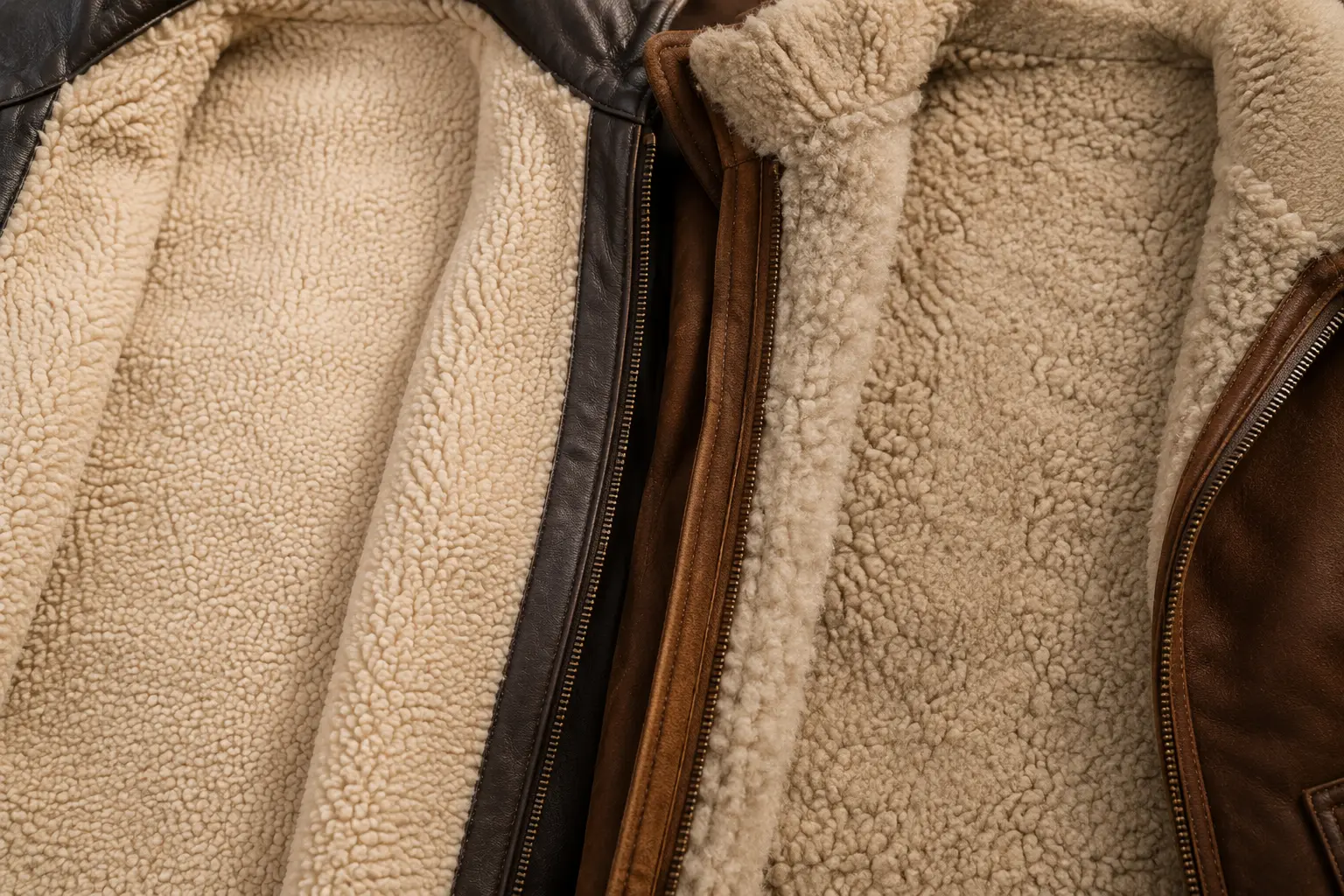
Sherpa and shearling get used interchangeably in casual conversation, but they're genuinely different materials with different warmth profiles, textures, and price points. If you're shopping for serious winter outerwear, understanding the difference will save you from buying the wrong jacket for your climate.
Shearling: Genuine Sheepskin, Wool Intact
Shearling is the pelt of a sheep or lamb that has been tanned with the wool still attached, so one side is soft, dense wool and the other is genuine leather. This dual-sided construction is what makes shearling exceptionally warm — the wool traps body heat while the leather side blocks wind, giving you insulation and weather resistance in a single material. It's also naturally breathable, which prevents the clammy overheating that some synthetic insulations cause.
Sherpa: A Synthetic Alternative
Sherpa fabric is a synthetic, fleece-like material engineered to mimic the texture and look of shearling wool without using animal skin. It's typically lighter, more affordable, and easier to maintain than genuine shearling, though it doesn't quite match shearling's insulation density or its natural moisture-wicking properties. Sherpa lining is most often used inside a jacket rather than as the primary material, providing a soft, warm interior against a leather or fabric shell.
Every sherpa and shearling piece at Blackstone Jackets specifies exactly which material and construction you're getting — no vague "faux fur" labeling.
Shop Winter Jackets →Which Is Warmer?
Genuine shearling generally outperforms sherpa in raw insulation, since the natural wool fiber structure traps more heat per given thickness than synthetic sherpa fleece. That said, quality sherpa lining paired with a substantial leather outer shell can still deliver excellent warmth for most winter conditions — the difference matters most in genuinely extreme cold rather than typical winter weather.
Sherpa Jackets in Our Collection
For a warm, accessible option that doesn't compromise on style, our kids boys sherpa jacket collection and women's sherpa jacket collection both use soft sherpa lining inside a genuine leather shell. Specific pieces like the navy sherpa leather jacket and green fleece sherpa jacket pair the lining with distinct color options for men. For younger kids, the maroon sherpa jacket with soft fleece lining brings the same warmth to a smaller, kid-specific fit.
Shearling Jackets in Our Collection
For maximum warmth and a more premium finish, our black shearling leather jacket combines genuine shearling with a full-grain leather exterior. The crocodile embossed shearling jacket takes this a step further, adding an embossed exterior texture to the shearling-lined construction — combining two of our most requested finishes in one piece. Our men's shearling coat collection extends this warmth into longer coat silhouettes for maximum coverage in serious cold.
Sherpa vs Shearling: Quick Comparison
| Factor | Sherpa | Shearling |
|---|
| Material | Synthetic fleece | Genuine sheepskin with wool |
| Warmth | Good | Excellent |
| Weight | Lighter | Heavier |
| Price | More affordable | Higher investment |
| Best For | Mild to moderate cold | Extreme cold, long-term investment |
Choosing Between the Two
If you live somewhere with moderate winters and want a versatile, budget-friendly warm layer, a sherpa-lined leather jacket covers most needs comfortably. If you deal with genuinely harsh winters or want a jacket that will develop character and last for decades, genuine shearling is worth the additional investment — much like the durability difference we cover in our guide to full-grain vs top-grain vs bonded leather.
Caring for Sherpa and Shearling
- Brush sherpa lining gently with a soft brush to keep the fleece texture from matting down over time
- Condition the leather exterior of shearling jackets every 4-6 months, being careful to avoid the wool side
- Store both types on wide hangers with breathing room — compressing the wool or fleece flattens the insulating loft