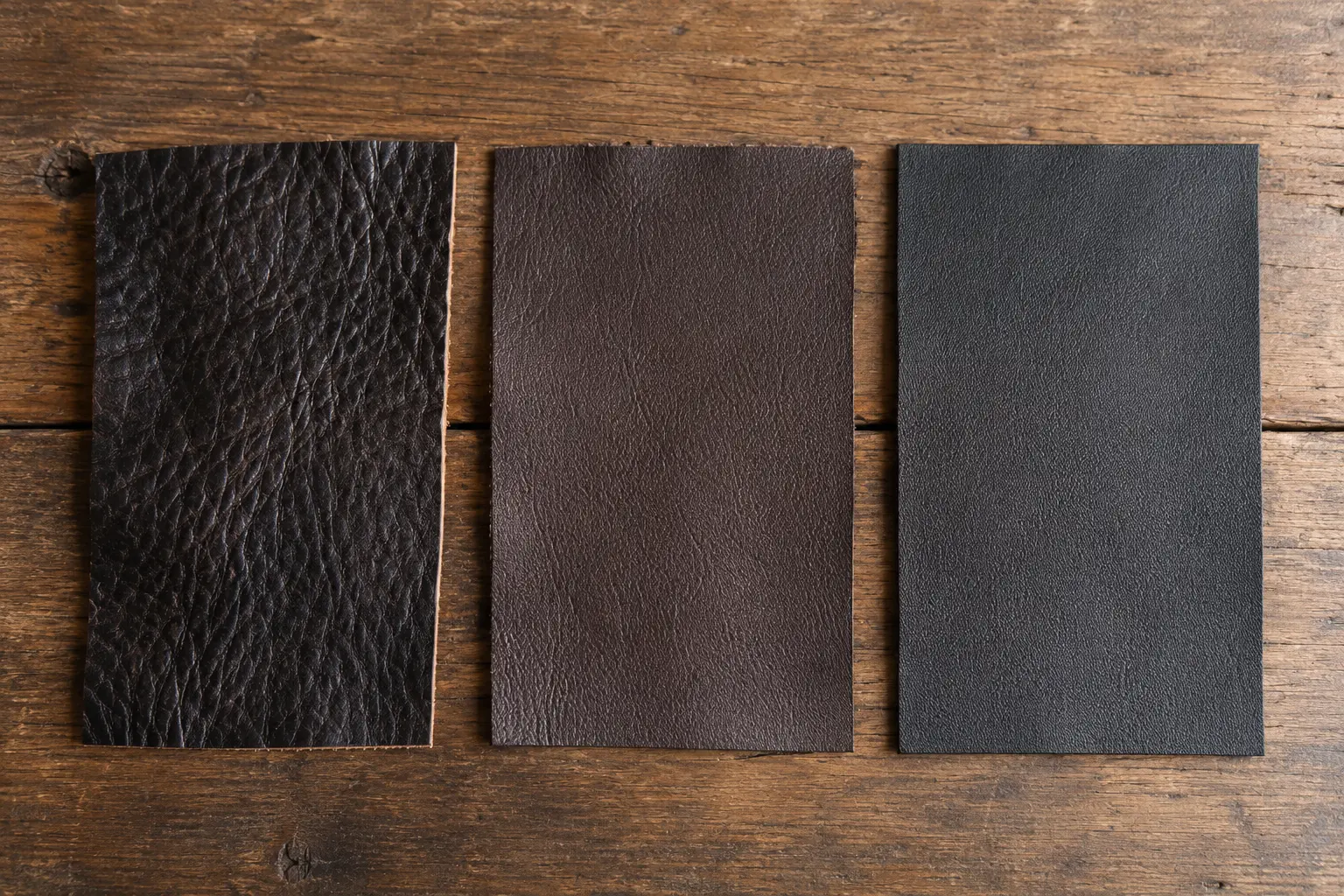
"Genuine leather" is the most misleading phrase in the entire jacket industry. It sounds premium, but it's actually the lowest bar a material has to clear to legally be called leather. Understanding the real hierarchy — full-grain, top-grain, and bonded leather — is what separates a jacket that lasts decades from one that cracks within a year.
This guide breaks down what each grade actually means, how to spot the difference, and which one is worth your money.
Why Leather Grades Exist
Not all parts of an animal hide are equal. The outermost layer is the toughest, most fibrous, and most naturally durable. As hides are split and processed into thinner layers to make manufacturing cheaper and more efficient, the resulting leather loses strength, character, and lifespan. That's where the grading system comes from — it describes how close a piece of leather is to that original, untouched top layer.
If you haven't already, it's worth pairing this with our guide on how to tell real leather from faux leather — grading only matters once you've confirmed the material is genuine leather to begin with.
Every Blackstone Jackets product page states the exact leather grade used — no vague "genuine leather" labels.
Shop by Leather Grade →The Three Leather Grades, Explained
01
Full-Grain Leather
This is the top layer of the hide, left completely unsanded and unaltered. It retains every natural mark — scars, wrinkles, and pore texture — which is why no two full-grain jackets ever look exactly the same. It's the strongest, most breathable, and longest-lasting grade, and it develops a rich patina as it ages. It's also the most expensive, because the hide has to be nearly flawless to use without correction.
02
Top-Grain Leather
The second layer down, lightly sanded to remove imperfections and create a more uniform, even surface. It's thinner and slightly less durable than full-grain, but still genuine, high-quality leather — and often more affordable and easier to dye consistently. Most premium leather jackets on the market, including many designer brands, use top-grain rather than full-grain.
03
Bonded Leather
Made from leftover leather scraps and fibers, shredded and glued together with a polyurethane coating to look like a solid hide. It's technically "genuine" in that it contains real leather content, but it behaves nothing like it — bonded leather peels, cracks, and delaminates within one to two years of regular wear. It's the grade most often hidden behind vague "genuine leather" labels at low price points.
How to Tell Them Apart When Shopping
- Check the surface texture. Full-grain shows natural, irregular marks. Top-grain looks smoother but still has subtle texture. Bonded leather often looks unnaturally uniform, almost printed.
- Check the price point. Full-grain jackets rarely sell below $200. Bonded leather is how brands offer a "leather jacket" under $60.
- Check the listing description. Reputable sellers specify the grade directly. If a listing only says "genuine leather" with no grade mentioned, assume it could be the lowest tier.
- Check the edges. Cut a hidden inner seam edge (or ask for a close-up photo) — full-grain and top-grain show a fibrous, natural cross-section, while bonded leather shows a compressed, particle-board-like layer.
Full-Grain vs Top-Grain vs Bonded: Quick Comparison
| Factor | Full-Grain | Top-Grain | Bonded |
|---|
| Durability | 20-30+ years | 10-20 years | 1-2 years |
| Surface | Natural, unaltered | Lightly sanded | Synthetic coating |
| Breathability | Excellent | Good | Poor |
| Ages/Patinas | Yes, beautifully | Slightly | No, cracks instead |
| Typical Price | $200+ | $120-$250 | Under $80 |
Full-Grain Leather in Practice: Real Examples
It helps to see the grading system applied to actual products rather than just in theory. A piece like our brown crocodile embossed real leather jacket uses full-grain hide as its base, even though the surface has been heat-pressed with an embossed pattern — the grade of the underlying leather and the surface finish are two separate specifications, and it's worth understanding both before you buy. Our guide to exotic embossed leather covers this distinction between grade and finish in more depth if you're shopping for textured jackets specifically.
Does Leather Grade Affect Care Requirements?
Yes — higher grades generally need less frequent conditioning since the natural oils and denser fiber structure resist drying out longer than lower grades. Full-grain leather can often go 4-6 months between conditioning sessions, while bonded leather's synthetic coating can crack regardless of how well it's maintained, since the underlying issue is structural rather than a lack of moisture. Our full leather jacket care guide breaks down the exact routine for each grade.
Which Grade Should You Buy?
If you want a jacket that becomes better with age and can realistically last decades, full-grain leather is the only grade worth considering — it's a genuine long-term investment piece. If budget matters but you still want authentic leather that will hold up for many years with proper care, top-grain is a smart middle ground. Bonded leather should generally be avoided for jackets altogether; it's more suited to low-stress items like book covers or furniture trim, not something worn and flexed daily.
Once you've settled on a grade, make sure the fit matches too — check our guide on how a leather jacket should actually fit before placing your order. And if color is still an open question, our breakdown of best leather jacket colors for your skin tone covers that decision separately from grade.
How Grade Affects Different Jacket Types
The grade of leather matters more for some jacket types than others. A rugged, high-flex style like a men's biker jacket benefits most from full-grain leather, since the constant bending at the elbows and shoulders puts stress that lower grades can't handle long-term. A structured piece that takes daily wear rewards the investment in a higher grade.
For lighter, more relaxed styles like a men's bomber jacket or a women's bomber jacket, top-grain leather is often a perfectly sensible choice — it holds up well under moderate wear while keeping the price more accessible. The same applies to a versatile everyday women's leather jacket, where top-grain balances quality and value nicely.
Grade Considerations for Kids Jackets
Kids outgrow jackets long before they wear them out, so the calculus shifts. For a kids biker jacket, a good top-grain leather usually makes more sense than premium full-grain — you get genuine leather quality and durability without over-investing in a jacket that will be outgrown within a year or two. The key is still confirming it's genuine leather rather than bonded, since bonded leather can crack and peel even within a single season of active kids' wear.
The Bottom Line on Leather Grades
Match the grade to how you'll use the jacket: full-grain for rugged, daily-wear investment pieces you plan to keep for decades; top-grain for versatile everyday jackets where value matters; and bonded avoided entirely for anything worn and flexed regularly. Above all, never let a vague "genuine leather" label make the decision for you — always confirm the specific grade before you buy.