A men's leather jacket is one of the few wardrobe investments that genuinely improves with age. But with dozens of styles, leather grades, and price points to navigate, choosing the right one can feel overwhelming. This complete 2026 guide breaks down everything you need to know — from leather types and silhouettes to fit and care — so you buy once and buy right.
Quick Answer
- Choose full-grain or top-grain leather for a jacket that lasts 20+ years.
- Match the style to your build — biker for structure, bomber for ease, cafe racer for lean frames.
- The shoulder seam fit is the one measurement no tailor can fix.
- Budget $150-$250+ for genuine leather; anything under $60 is likely synthetic.
Why Buy a Leather Jacket?
A quality leather jacket is a lifetime piece. Unlike fabric outerwear that wears out and looks dated within a few seasons, genuine leather develops a rich patina, molds to your body, and stays stylish across decades. It is warm, wind-resistant, durable, and endlessly versatile — pairing with everything from a plain t-shirt to a button-down shirt. For most men, a single well-chosen leather jacket earns its cost many times over in cost-per-wear.
Understanding Leather Grades
The single biggest factor in a jacket's quality and lifespan is the leather grade:
- Full-grain leather is the top layer of the hide, unaltered, and the strongest, longest-lasting grade — it develops the best patina.
- Top-grain leather is lightly sanded for a more uniform finish; still genuine and durable, often more affordable.
- Bonded leather is scraps glued together — it cracks and peels within a year or two and should be avoided for jackets.
Our detailed guide on full-grain vs top-grain vs bonded leather explains exactly how to tell them apart, and our guide on real vs faux leather covers six tests to confirm you're buying genuine hide.
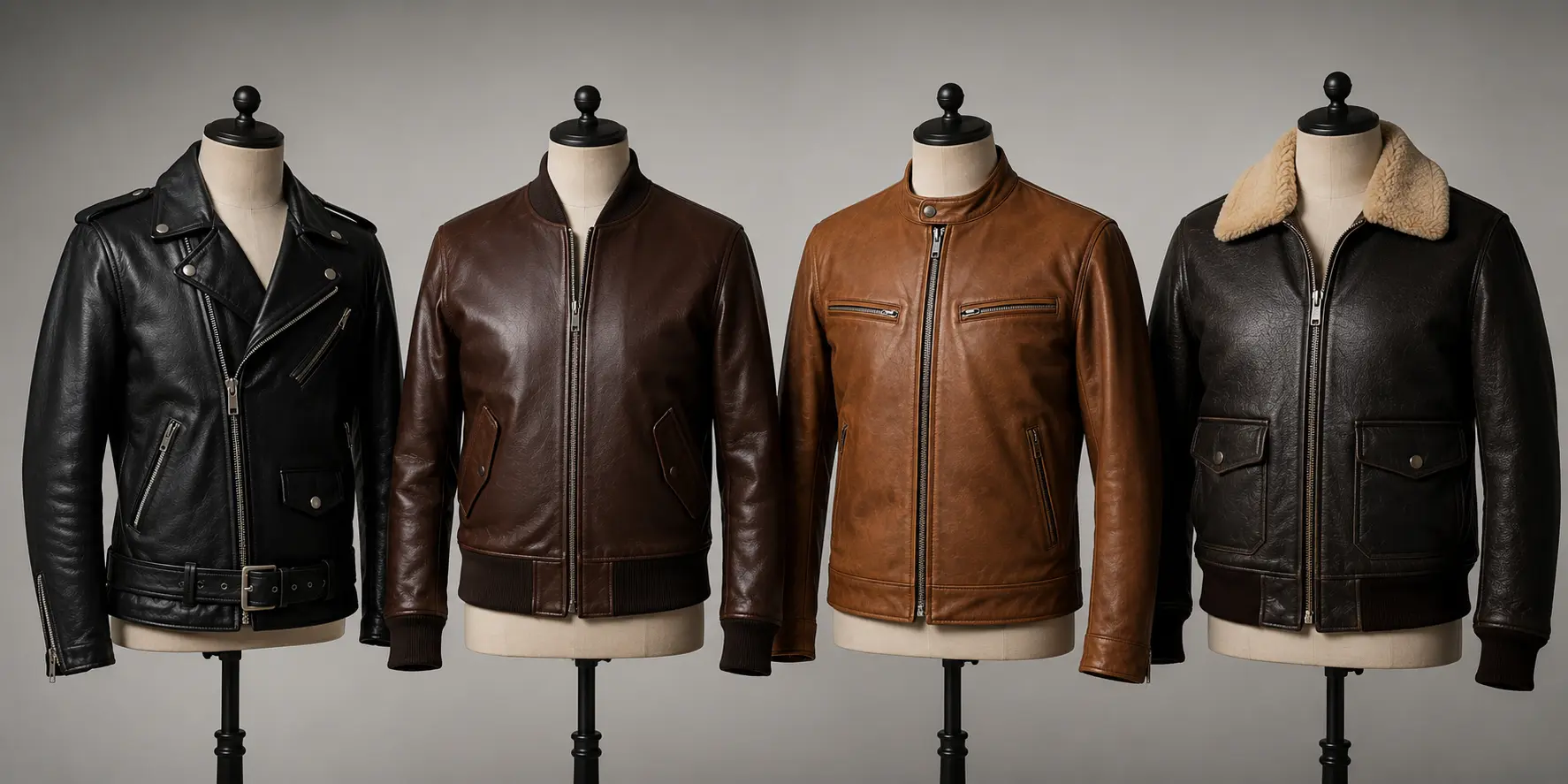
The Main Men's Leather Jacket Styles
Each style carries its own character and suits different builds and occasions:
- Biker jackets — structured, asymmetric zip, best for broad or athletic builds. See our men's biker jacket collection.
- Bomber jackets — relaxed, ribbed cuffs, the most universally flattering. Browse men's bomber jackets.
- Cafe racer jackets — minimal collar, slim cut, ideal for lean frames.
- Aviator and flight jackets — shearling collars and rugged presence for cold weather.
- Suede jackets — a softer, more casual alternative to smooth leather. Explore men's suede jackets.
How Should a Men's Leather Jacket Fit?
Fit is what separates a jacket that looks tailored from one that looks borrowed. The most important rule: the shoulder seam must sit exactly at the edge of your shoulder bone. This is the one measurement a tailor cannot adjust. Sleeves should end at your wrist bone, and you should be able to fit one flat hand between your chest and the zipped jacket. Our full leather jacket fit guide walks through every measurement in detail.
What Should You Budget?
| Price Range | What You Get |
|---|
| Under $60 | Synthetic or bonded leather; short lifespan |
| $150-$250 | Genuine top-grain or full-grain; solid everyday quality |
| $250+ | Premium full-grain, reinforced stitching and hardware |
Caring for Your Leather Jacket
A leather jacket rewards basic care with decades of wear. Wipe it down regularly, condition every 3-6 months to prevent cracking, store it on a wide hanger, and keep it out of prolonged direct sunlight. Our complete leather jacket care guide covers the full routine.
Leather Jacket Styles Compared in Depth
Beyond the headline styles, it helps to understand how each one performs in real life. The biker and double rider deliver the most rugged, structured presence and suit those who want an edgy, hard-wearing statement. The bomber is the great all-rounder — relaxed, comfortable, and the easiest to wear for men who want versatility without commitment to a bold look. The cafe racer is the minimalist's pick, slim and clean, ideal for layering and dressing up. Aviator and flight jackets bring shearling warmth and a vintage character best suited to cold weather, while suede offers a softer, more casual texture that reads relaxed rather than tough. Matching the style to how you actually live and dress is more important than chasing whichever looks best in a single photo.
Seasonal Considerations for Leather Jackets
A leather jacket isn't strictly a winter garment. Lightweight styles like the cafe racer and unlined bomber work beautifully in spring and autumn, offering wind resistance without overheating. For deep winter, a shearling-lined or aviator style provides genuine warmth, and layering a knit underneath extends any leather jacket's cold-weather range. In summer, a leather jacket can still work for cooler evenings, though a lighter, unlined construction is far more comfortable. Thinking about the seasons you'll wear it most helps you choose the right weight and lining — a heavy lined biker may be overkill if you mostly need a transitional layer.
Common Mistakes Buyers Make
The most frequent leather jacket mistakes are avoidable. First, buying on price alone and ending up with bonded leather that cracks within a year. Second, sizing up "to be safe," which ruins the shoulder fit that defines how a jacket looks. Third, ignoring the break-in period and assuming a slightly stiff new jacket is the wrong size — genuine leather softens and molds within a few weeks. Fourth, neglecting care, which turns even a premium jacket brittle over time. Avoiding these four mistakes puts you ahead of most buyers and ensures your jacket delivers the decades of wear it's capable of.
Where to Buy a Leather Jacket You Can Trust
Where you buy matters as much as what you buy. The most reliable sellers state the exact leather grade openly, show detailed close-up photos of the leather, stitching, and hardware, and provide clear sizing information rather than vague S/M/L labels. Transparent return policies and genuine customer reviews add further confidence. A seller who hides the leather grade behind vague "genuine leather" language, or who can't answer basic construction questions, is one to approach with caution. Buying from a source that stands behind its materials and construction is the surest way to end up with a leather jacket that lives up to its promise. You can browse clearly specified options across the full collection, where every jacket lists its leather and construction details so you know exactly what you're investing in before you commit.
Final Thoughts
The perfect men's leather jacket comes down to four decisions: genuine leather grade, the right style for your build, a correct shoulder-seam fit, and consistent care. Get those right, and your jacket won't just last — it will look better every year you own it, making it one of the smartest wardrobe investments you can make.