How to Style a Leather Jacket in Winter: Layering Guide | Blackstone Jackets
Winter Edit
How to Style a Leather Jacket in Winter: Layering Guide
A leather jacket works brilliantly in winter if you layer it correctly: start with a thermal or merino base layer, add a sweater or hoodie as insulation, and let the leather act as the windproof outer shell.
Blackstone JacketsUpdated October 20267 Min Read
Quick Answer
Thermal or merino base layer, then a sweater or hoodie for insulation.
Leather acts as the windproof outer shell over those layers.
Shearling-lined or quilted styles for real cold.
Fit roomy enough for layers without losing the jacket's shape.
Can You Wear a Leather Jacket in Winter?
Yes — leather is naturally windproof and water-resistant to a degree, making it a strong winter outer shell. The catch is insulation: leather itself traps little heat, so a thin unlined jacket worn over a t-shirt will leave you cold. The solution is layering, which is exactly what this guide covers. With the right layers underneath, a leather jacket handles winter as well as most coats — and looks better doing it. For genuinely extreme cold, consider insulated styles like those in our shearling jackets and coats guide.
The Three-Layer System
Winter layering follows a simple formula: base, mid, shell. The leather jacket is your shell — it blocks wind and sheds light precipitation. Underneath, build warmth with the other two layers.
Layer 1: The Base
Start with a thermal top or merino wool base layer that wicks moisture away from the skin. Merino is the gold standard: warm, breathable, and odour-resistant. Avoid cotton thermals for all-day wear — once damp, cotton stays cold against the skin. A fitted thermal also smooths the silhouette under the jacket, which matters since leather shows every lump beneath it.
Layer 2: The Insulation
This is where the warmth lives. A chunky knit sweater, a fleece, or a hoodie traps air and insulates. Crewneck sweaters in merino or cashmere-blend give the smartest look; hoodies give a streetwear edge (and the hood adds neck warmth when the jacket's collar is low). The key constraint: this layer must fit under your jacket, so it should be warm but not bulky.
Layer 3: The Leather Shell
Your leather jacket goes on top, cutting wind and adding structure. Zipped up with the collar popped, it seals out drafts surprisingly well — simple physics, timeless style, and real warmth on the coldest days. This is why fit matters so much for winter: your jacket needs room for the layers beneath without straining at the zipper.
Choosing a Winter-Ready Leather Jacket
Not all leather jackets are equal in winter. If you plan to wear leather as your primary cold-weather outerwear rather than just an occasional layer, prioritise these features — they determine whether the jacket is a fair-weather friend or a genuine winter workhorse.
Shearling and Fur Linings
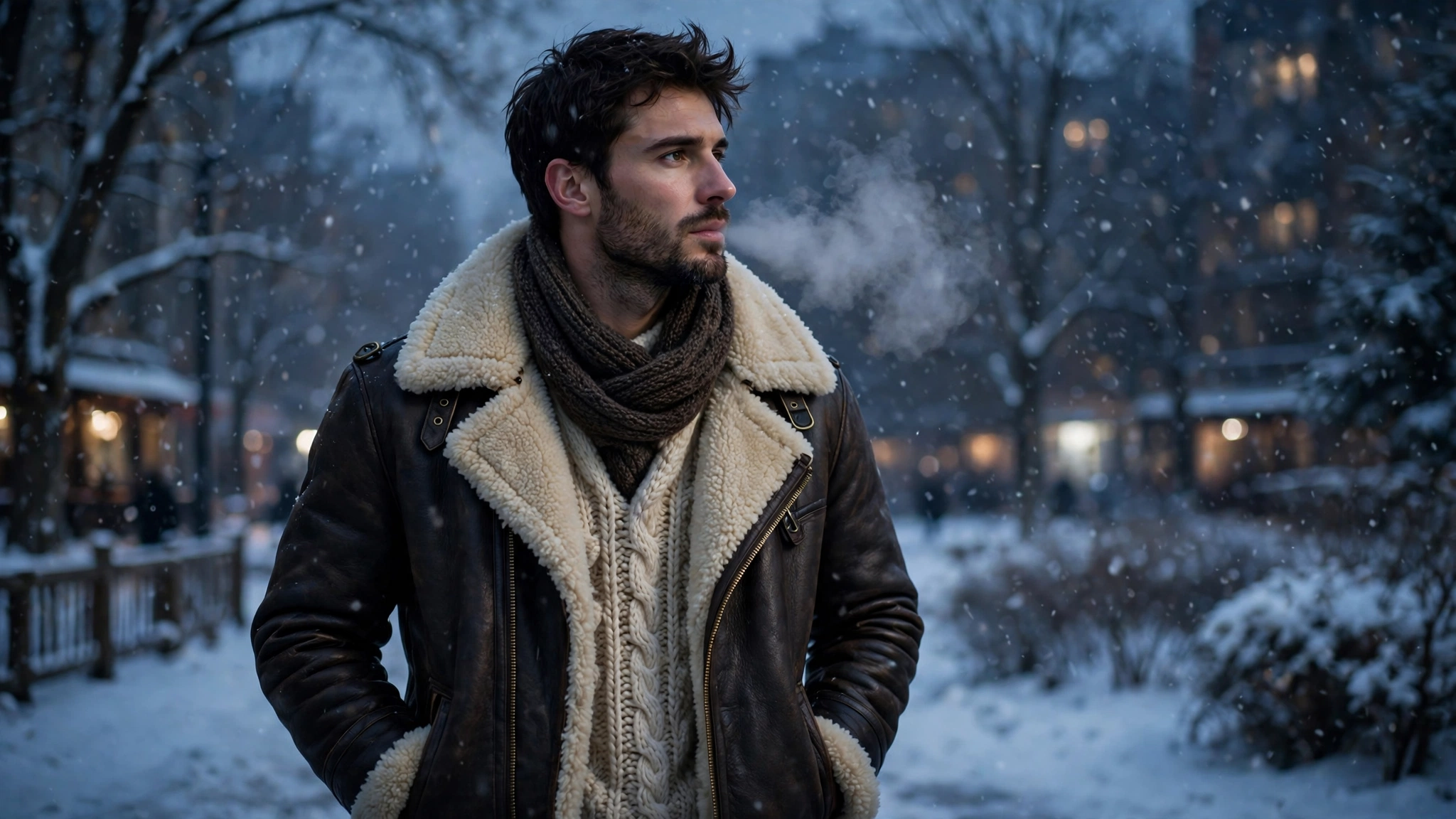
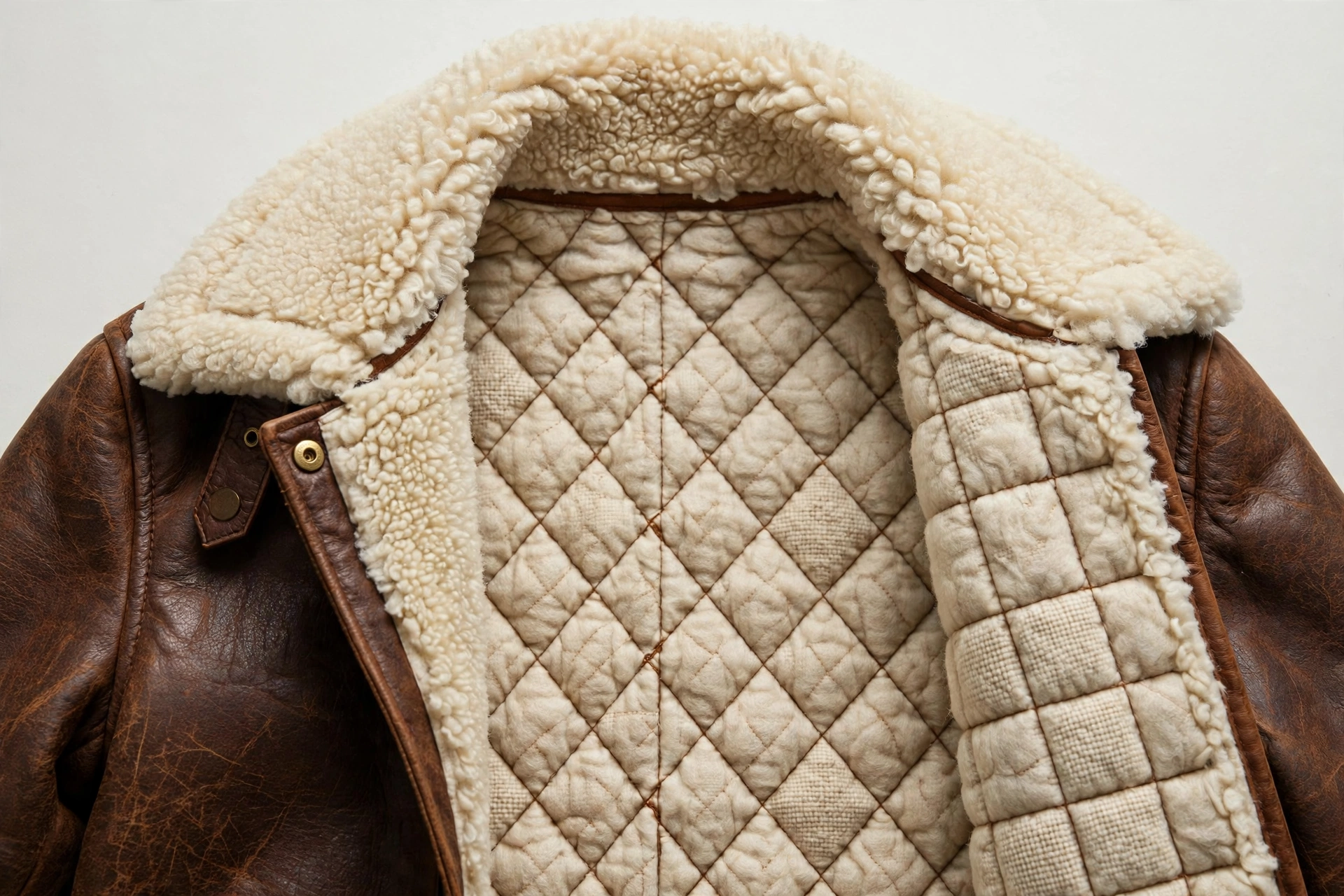
A shearling-lined jacket — like a B-3 shearling flight jacket or a women's shearling leather jacket — is the warmest leather option by a wide margin. The dense wool lining traps heat like a duvet while the leather shell blocks wind. These jackets handle genuinely cold weather on their own.
Quilted Linings
Quilted linings add meaningful warmth without the bulk of shearling. A moto jacket with quilted lining or a diamond-quilted style sits between an unlined jacket and a shearling one — ideal for moderate winters. Quilted styles also look sharp, adding visual texture to the interior.
Longer Cuts and High Collars
Hip-length jackets cover more of you than cropped styles, and high collars — band collars, shearling collars, or shirt-style collars — protect the neck, where heat escapes fastest. A scarf fills any remaining gap and adds a classic winter accent.
Fit: Room for Layers Without Bulk
The winter rule: your jacket should close comfortably over your thickest intended layer. When trying a jacket for winter wear, wear the sweater you will actually layer under it. You should be able to zip up without the zipper straining, and the shoulders should still sit cleanly — if the shoulders pull, the jacket is too small regardless of how the body feels. A jacket bought slightly roomy for winter can still look sharp; one bought too tight just looks wrong. See our shoulder seam fit guide for measuring tips.
Winter Outfit Formulas That Work
Put the system into practice with these dependable combinations. For a smart-casual winter look: thermal base, charcoal merino crewneck, black leather jacket, dark jeans, and leather boots — with a wool scarf for the coldest days. For a rugged weekend look: thermal, flannel shirt, chunky knit, a tobacco brown shearling jacket, work boots, and a beanie.
Women's winter layering follows the same logic: a fitted thermal, a turtleneck sweater, and a shearling-lined or quilted leather jacket over black jeans and knee-high boots. For the coldest days, a longer shearling coat, like the women's olive green leather shearling coat, adds serious coverage. More outfit inspiration lives in 5 ways to style a leather jacket for any occasion.
Accessories That Complete the Winter Look
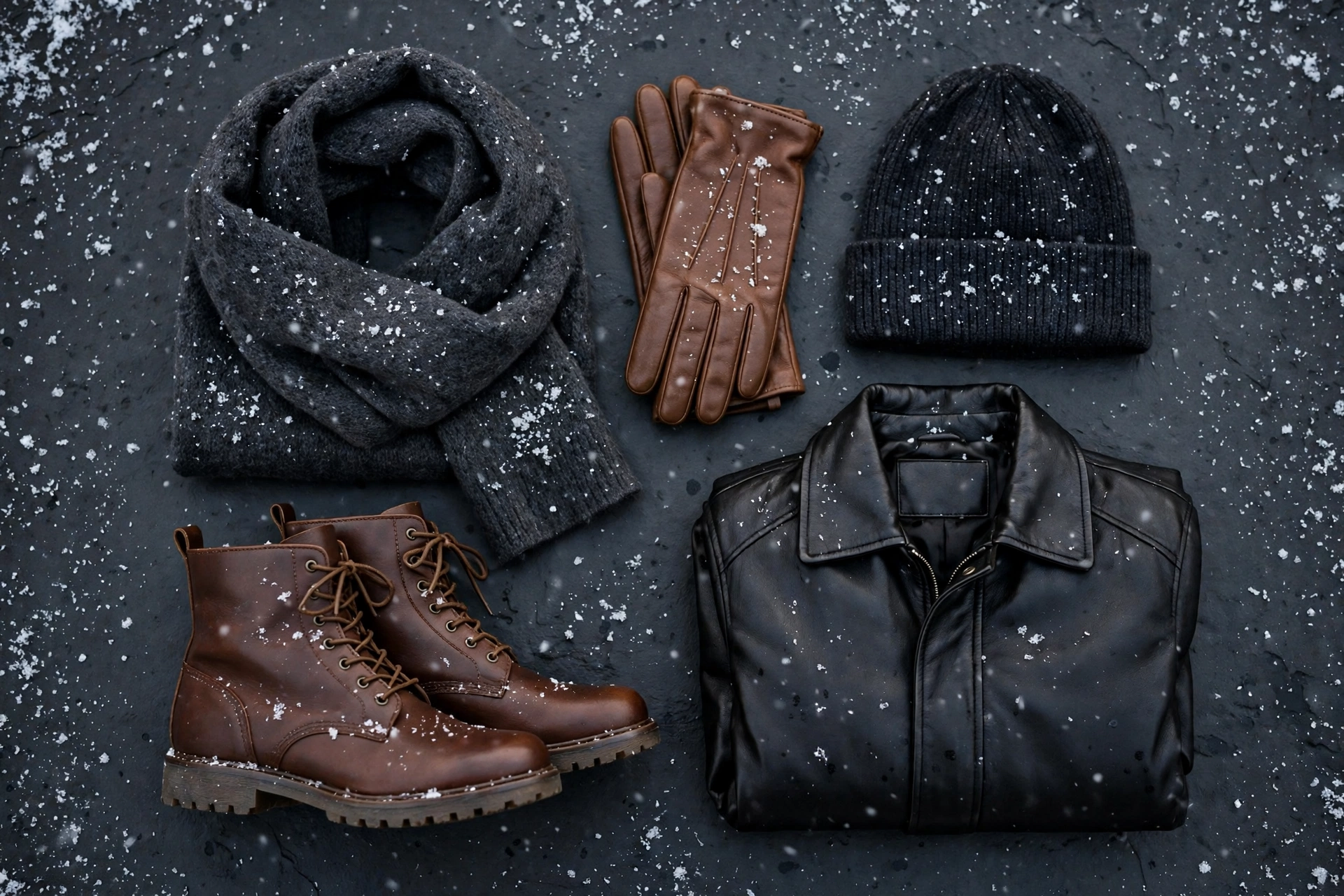
The right accessories make a winter leather outfit feel intentional rather than improvised. A wool scarf in charcoal, navy, or camel fills the neck gap, adds a layer of warmth where the jacket's collar ends, and introduces texture contrast against smooth leather. Leather gloves — ideally in a tone that echoes the jacket — keep the look cohesive; avoid bulky ski gloves, which clash with leather's sleekness. A simple beanie or wool watch cap works with casual shearling and biker styles, while a felt fedora suits longer belted coats. Footwear matters too: leather boots in brown or black ground the outfit and handle winter streets far better than sneakers. The principle is consistency — rugged jacket, rugged accessories; sleek jacket, refined accessories.
Winter Care: Protecting Leather from the Elements
Winter is hard on leather. Salt, slush, and road grime should be wiped off promptly with a damp cloth, and the jacket should air-dry away from radiators or direct heat — never speed-dry leather, as rapid heat shrinks and stiffens the hide. Condition the leather before winter starts and again mid-season; cold, dry air strips moisture from hides faster than most owners expect. A light water-repellent treatment helps with snow and sleet. Our leather jacket care guide covers conditioning and storage in full detail.
Shop Winter Leather Jackets
Find your winter-ready leather jacket — built to layer, made to last.
With proper layering, yes. Leather blocks wind effectively; add a thermal base and an insulating mid-layer, or choose a shearling-lined style for the warmest option.
What do you wear under a leather jacket in winter?
A thermal or merino base layer plus a sweater, hoodie, or fleece. The combination should fit comfortably under the jacket without straining the zipper.
Can leather jackets get wet in snow?
Light snow is fine — brush it off and let the jacket air-dry. For heavy wet snow, a water-repellent treatment adds protection.
Should I size up in a leather jacket for winter layering?
Try the jacket over your thickest winter layer; if it zips comfortably with clean shoulders, the size is right. Do not size up blindly — shoulder fit still matters most.
Do shearling jackets work in rain?
Shearling linings handle cold brilliantly but the wool absorbs water, so they are better in dry cold and snow than in heavy rain.