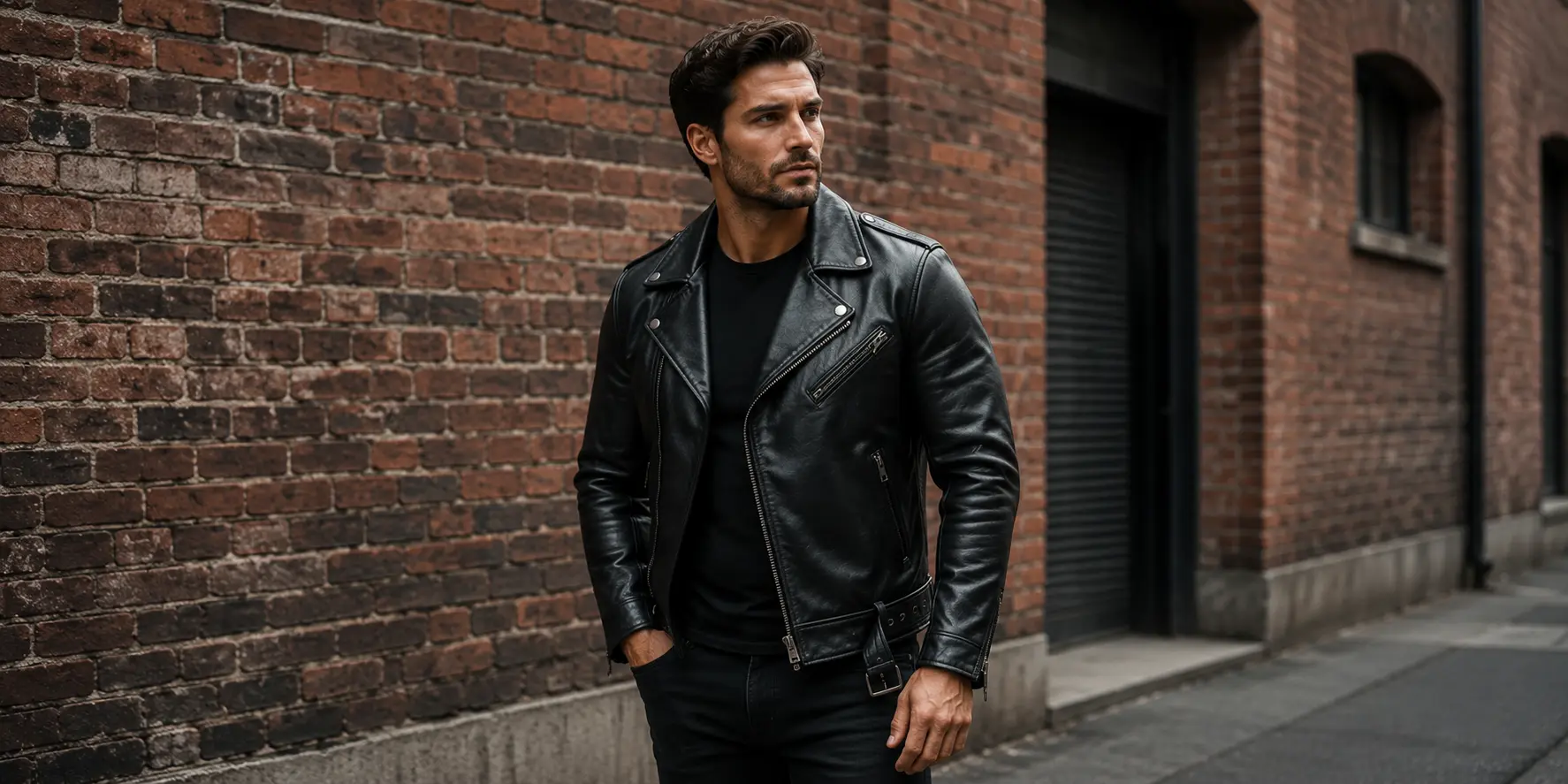
The biker jacket is bold by design, which makes choosing the right one more important than with subtler styles. Get the silhouette, leather, and fit right and it becomes a signature piece; get them wrong and it can overwhelm your look. This step-by-step guide helps you choose a biker jacket that suits your build and style.
Quick Answer
- Best for broad or athletic builds — the structured cut suits them most.
- Black is the most versatile; brown reads more vintage and rugged.
- Full-grain cowhide gives the most authentic, durable result.
- Minimal hardware for versatility; heavy hardware for a bolder statement.
Step 1: Consider Your Build
The biker's structured, fitted cut naturally flatters broad, athletic, or average builds. If you have a leaner frame, look for a slimmer biker cut so the jacket doesn't overwhelm you — or consider a related style. The key is that the jacket should follow your body's lines, not hang boxily. Browse the men's biker collection to compare cuts.
Step 2: Pick Your Leather
For a jacket that takes real wear like a biker, genuine full-grain cowhide is ideal — it's tough, protective, and develops character over time. Top-grain is a solid alternative. Steer clear of bonded leather, which cracks under the biker's constant flex. See our leather grades guide for details.
Step 3: Choose the Right Color
Black is the classic, most versatile biker color — sharp, urban, and easy to style. Brown gives a more vintage, rugged feel and pairs well with earth-tone wardrobes. Distressed finishes lean into a worn-in, hard-wearing aesthetic. Our guide on leather jacket colors helps you choose the shade that suits you.
Step 4: Decide on Hardware
Hardware defines how bold your biker jacket reads. Minimal, understated zippers and snaps keep the jacket versatile and easier to dress up. Heavy hardware, extra zippers, and studs make a bolder statement but limit versatility. Choose based on how loud you want the jacket to be.
Step 5: Nail the Fit
The biker is a fitted style, so the shoulder seam sitting correctly is non-negotiable, and the jacket should hug the torso without excess fabric. Remember leather loosens slightly with wear, so buy snug. Our fit guide covers every measurement.
Choosing Framework at a Glance
| Your Priority | Best Choice |
|---|
| Maximum versatility | Black, minimal hardware |
| Vintage rugged look | Brown or distressed |
| Bold statement | Heavy hardware, studs |
| Lean build | Slim biker cut |
Reading the Leather Finish
Beyond the grade, the leather's finish dramatically changes a biker jacket's character. A smooth, polished finish reads sleek and modern, working well for those who want to dress the jacket up. A matte or oiled finish looks more understated and rugged. A distressed or waxed finish gives an immediate vintage, worn-in appearance that many biker fans prefer. None is objectively better — the right finish depends on the look you're after. When choosing, picture the finish alongside your existing wardrobe to ensure it fits the overall aesthetic you want to project.
Hardware Colour and Detailing
Hardware colour is an easily overlooked choice that shifts the whole jacket. Silver or nickel hardware is the classic, versatile default that suits most colours and outfits. Antique brass or gold hardware gives a warmer, more vintage feel that pairs especially well with brown leather. Black or gunmetal hardware creates a stealthy, modern, all-dark look. Matching the hardware tone to the leather colour and your intended style makes the jacket feel cohesive and considered rather than generic.
Trying It On: What to Feel For
When you try a biker jacket on, go beyond just looking in the mirror. Zip it fully and raise your arms — a well-fitting biker allows movement without the whole jacket riding up dramatically. Check that the lapels sit flat and close cleanly. Feel whether the shoulders sit right at your shoulder edge, as covered in our fit guide. Remember genuine leather feels slightly stiff when new and softens with wear, so prioritize the shoulder and chest fit over initial suppleness. These physical checks reveal fit issues that a mirror alone can miss.
Trying Before You Commit
Whenever possible, try the fit principles in practice before committing to a biker jacket. Take real measurements of your shoulders, chest, and sleeve length, and compare them against the seller's size chart rather than guessing from a label. Picture the jacket with at least three outfits you already own to confirm it will actually integrate into your wardrobe. Consider the leather grade against your budget and how long you want it to last. Taking these deliberate steps, rather than buying on impulse, dramatically increases the odds you'll love the jacket long-term. The full collection makes this easier by listing detailed measurements and leather specifications, so you can match a jacket to your body and wardrobe with confidence rather than hoping it works out.
Final Thoughts
Choosing the right men's biker jacket comes down to matching the silhouette to your build, selecting genuine leather, picking a color and hardware level that fits your style, and nailing the fit. Follow these steps and your biker jacket won't just look good — it'll feel like it was made for you. Protect it long-term with our care guide.